The short answer: start from what you want buyers to think, feel and do, not from the films. Choose three subjects you can own, then plan a programme: one or two big films a year, a regular series, and short answers to the questions buyers ask. Put real people at the centre, publish every week on YouTube and LinkedIn with the words written out, and judge it on what people remember and do, over two years.
58%
of B2B marketers named video among the formats that got their best results (CMI)
12x
how much more the best creative can return than the worst (Thinkbox)
0.24
uploads a week on the median FTSE 100 B2B channel, against 5.8 for the best
Why B2B video needs a strategy, not a shopping list
Most B2B video is made one film at a time: a launch, an event, a recruitment push. Each film may be good, but nothing connects them, and the channel becomes an archive. In our audit of more than 1,600 company channels, 72% of the views on big companies’ uploads looked paid for, while channels that earned their views had about seven times the subscribers per view. A strategy is what turns a pile of films into something people choose to come back to.
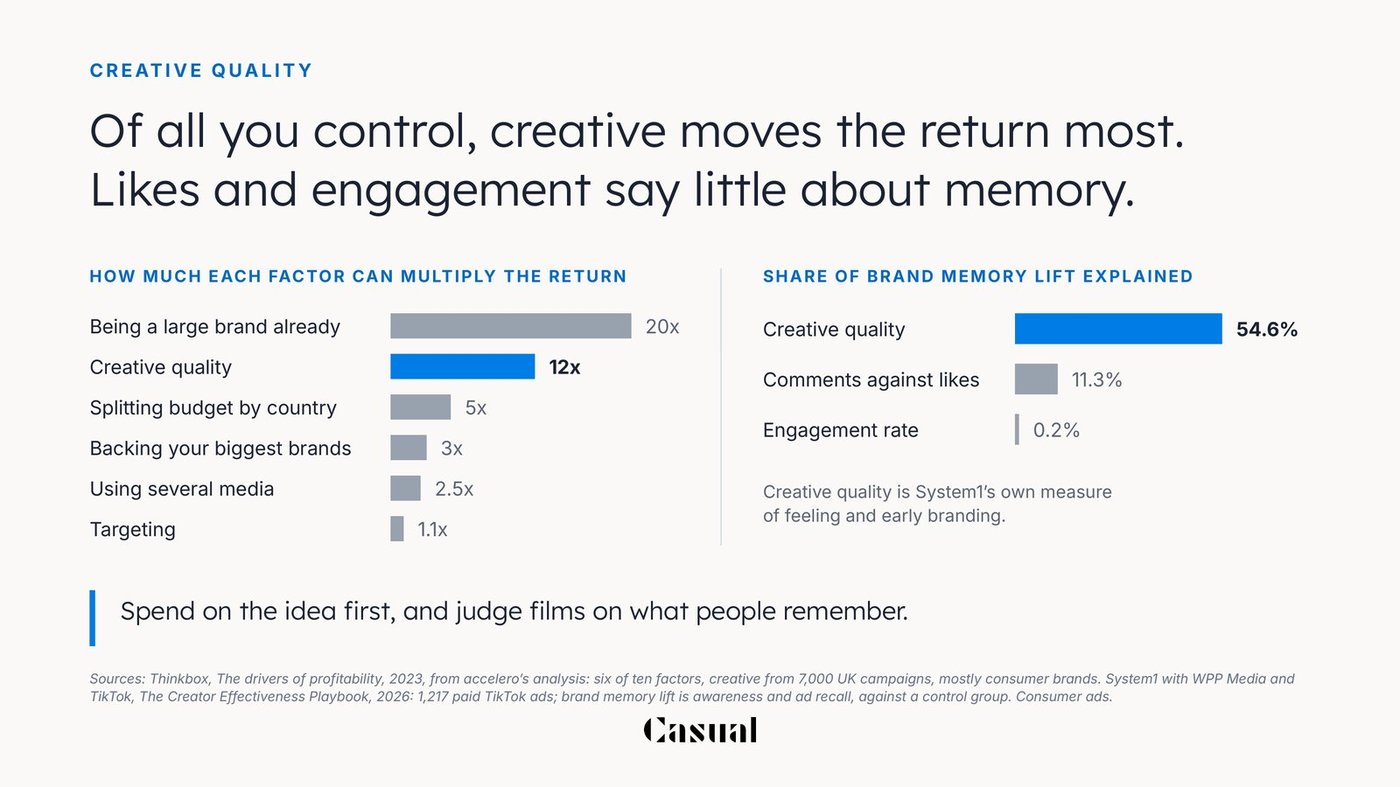
Of everything a marketer controls, creative quality moves the return most. From Why it’s worth investing in video.
How do you build a video content strategy for a B2B company?
- Write down the job. What should buyers think, feel and do after watching? Which buyers, at which stage? One sentence each.
- Pick three subjects you can own. Tie each to a strand of your purpose. Choose subjects where nobody in your category is the obvious answer yet. In most categories nobody owns the subject on YouTube yet, so a company that commits has room to lead. What is a content ecosystem? explains how we find them.
- Plan a programme. One or two big films a year (hero), a regular series people come back for (hub), and short films that answer the questions buyers search for (help). See hero, hub and help.
- Put a person at the centre. Only 7 in 100 B2B video ads on LinkedIn show any human emotion, by LinkedIn’s own count. In our research, 19 of 22 award-winning films had a protagonist, against 7 of 28 films with no award found.
- Teach. How-to series beat the rest of their own channel in 12 of 17 tests. Interview shows did in 8 of 15, and whole-event footage in none of 13.
- Read every idea before it is made. Check each idea for attention, memory, emotion and action before money goes into it. We use Storypulse; any honest read before the shoot is better than none.
- Publish twice, with the words. On YouTube and LinkedIn, and on your own site with the full transcript, so people and AI tools can read what the film says. Our paper Video for AI answers and agents covers the set-up.
- Post every week. The busiest third of channels earned 3.6 times the views per subscriber of the quietest third, though each upload drew fewer views.
- Measure from the first upload. Returning viewers, earned views, branded search and enquiries, not totals. How to measure whether your content strategy is working lists what to count.
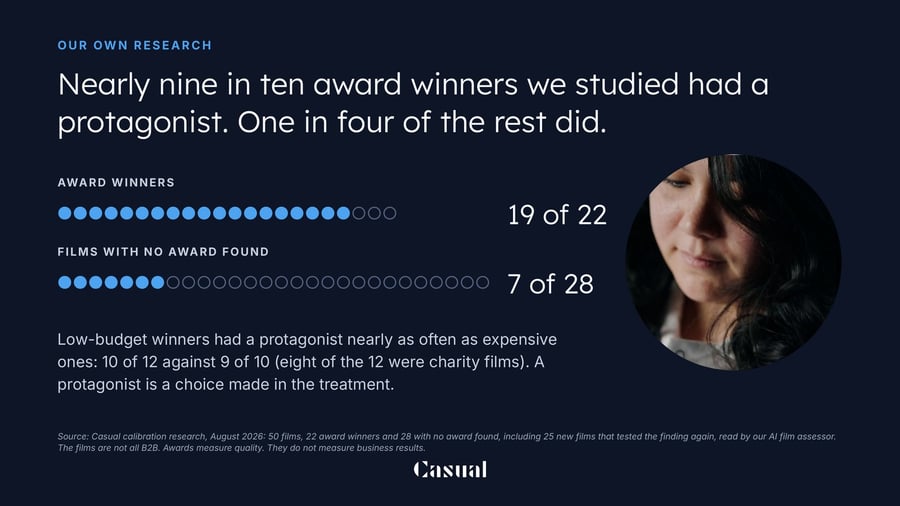
Nearly nine in ten award winners we studied had a protagonist. From The case for human storytelling.
What a year of B2B video can look like
| Part | How many | What it does |
|---|---|---|
| Big film (hero) | One or two a year | Gives people a reason to notice you, and gives you material to cut down for months |
| Series (hub) | Every week or fortnight | Brings people back; a named host makes it a show |
| Answers (help) | One per buyer question | Gets found in search and AI answers when buyers are looking |
| Cut-downs and Shorts | From every film | Carries each idea to LinkedIn, Instagram and YouTube Shorts |
How to plan a year of video content turns this into a calendar.

Questions people ask
How much should a B2B video content strategy cost?
It depends on how many films and how often. Our corporate video cost guide gives ranges, and a series costs less per film than one-offs.
Should we start on LinkedIn or YouTube?
Both. LinkedIn is where many buyers scroll; YouTube is where people search and where AI tools look. Publish each film on both.
How long before it works?
Expect to judge reach in months and returns in years. On UK linear TV, more than two thirds of the profit came after the first 13 weeks (Thinkbox, mostly consumer brands).
Can we use the films we already have?
Yes, if they teach or tell a story. Whole-event footage rarely travels. Cut the best moment instead.
Keep exploring

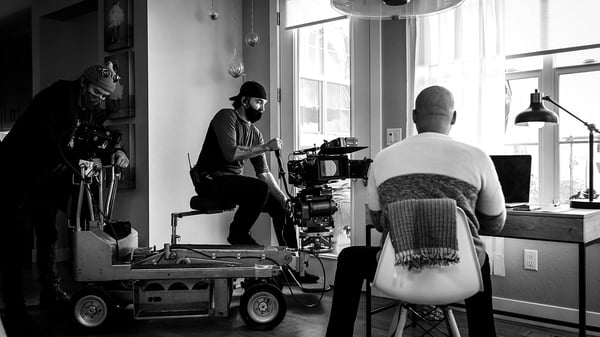
Where these figures come from
- Content Marketing Institute, 2025: 980 B2B marketers, more than one answer allowed (58%). Thinkbox, The drivers of profitability, 2023, from accelero’s analysis of about 7,000 UK campaigns, mostly consumer brands (12x). Thinkbox, Profit Ability 2, 2024 (two thirds after 13 weeks).
- Casual Films, Company YouTube Benchmark, September 2026: 1,621 channels read through the YouTube API; FTSE 100 upload rates; series tests are small, one channel per series; links show no cause. “Looks paid for” means 5,000 or more views with likes on fewer than 0.1% of them.
- LinkedIn Creative Labs, The Art and Science of Video Storytelling, 2025 (7 in 100); LinkedIn’s own count.
- Casual calibration research, August 2026: 50 films, read by our AI film assessor; not all B2B; awards measure quality, not results.
- HSBC and Casual Films, Principal Engineers case study.
Read the full papers on our research page.
About Casual. Casual makes business films that change what people do. Since 2006 we have made films for companies such as Google, HSBC, BMW and GSK, from eight offices in seven countries. Want a video strategy your buyers will come back to? Brief us and a producer will reply within two working hours.