Casual · Creative intelligence
What makes B2B film work.
We study the films companies publish, how they work and what they earn. These papers share what we found. Read any of them in full, with no email required.
 How an AI tool reads a film: a frame a second, plus the transcript.
New research · October 2026
We audited more than 1,600 company YouTube channels. This is what we found.
A year of uploads from the channels of the Fortune 500, the Global 2000 and the FTSE 100, plus 129 fast-growing brands.
3.6x
The views per video earned by the busiest channels, vs the quietest.
About 7x
Channels that earn, rather than buy, their views have about seven times the subscribers per view.
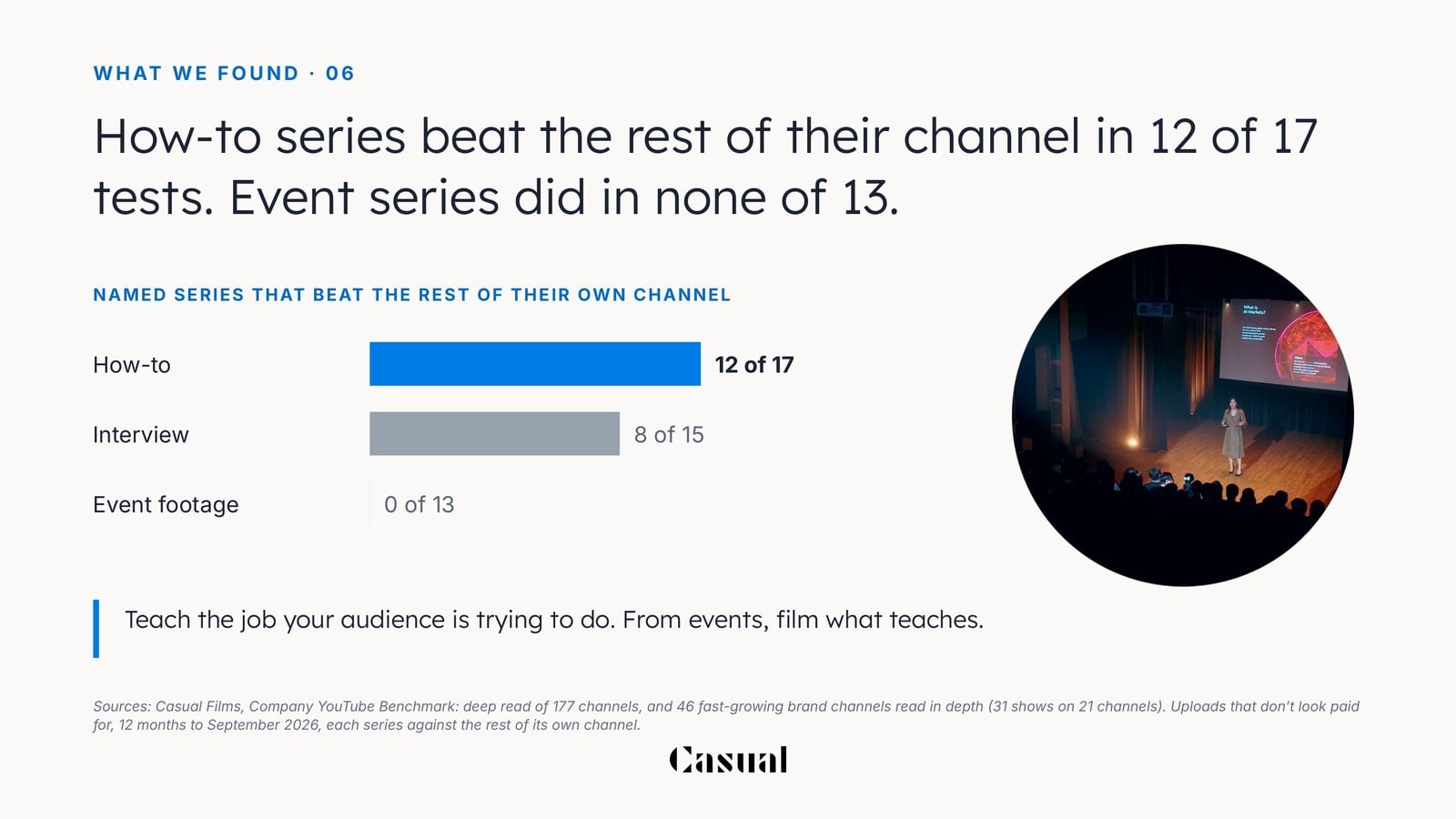
12 of 17
How-tos beat the channel average. Films covering events tend to drastically underperform.
Read the paper Compare your channel
Read through the YouTube API, September 2026.
Inside the papers
Six of the charts, straight from the pages. Every figure names its source on the page it sits on.
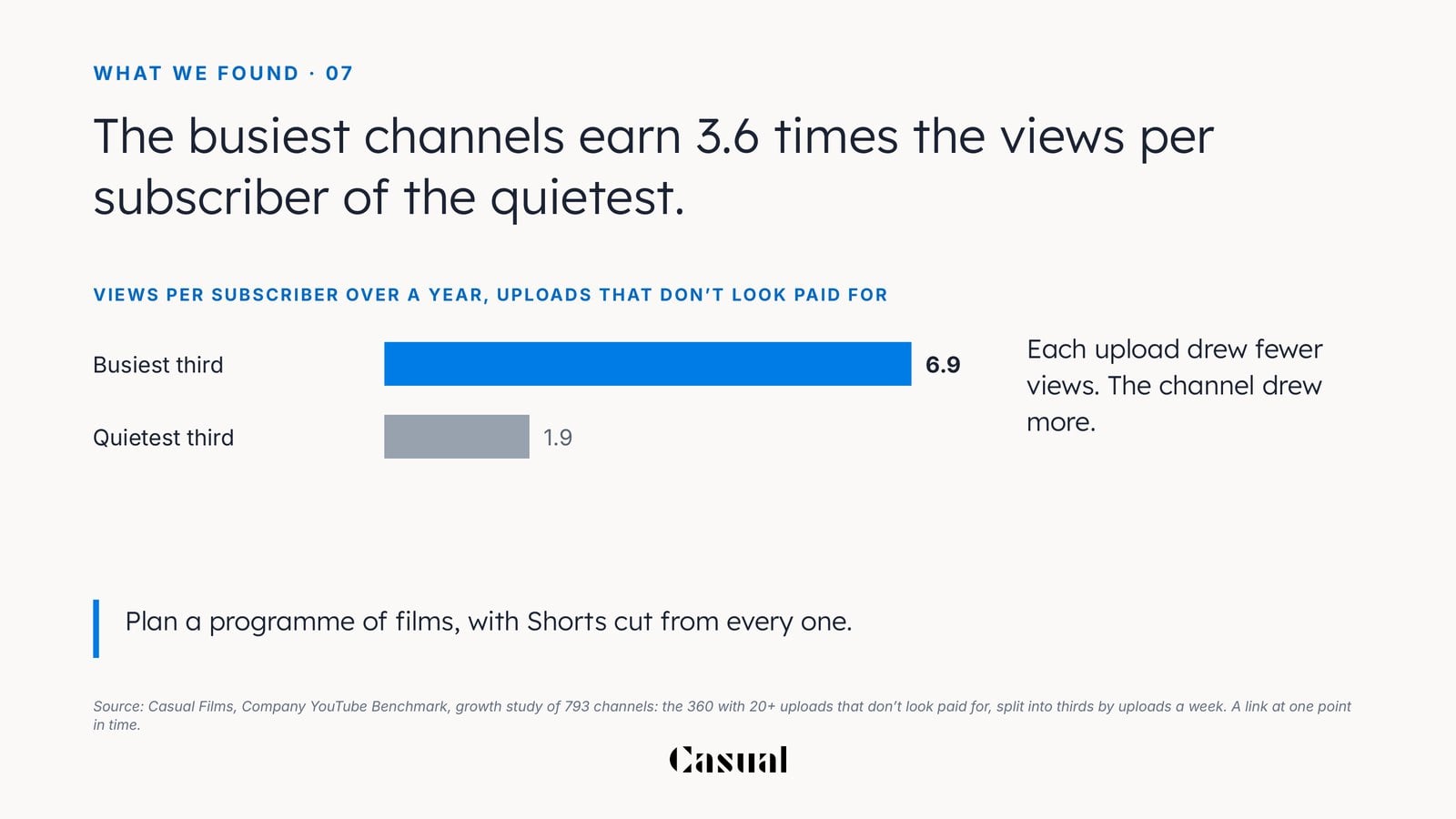
Busy channels win. The busiest third of channels earn far more views per subscriber than the quietest.
The YouTube audit
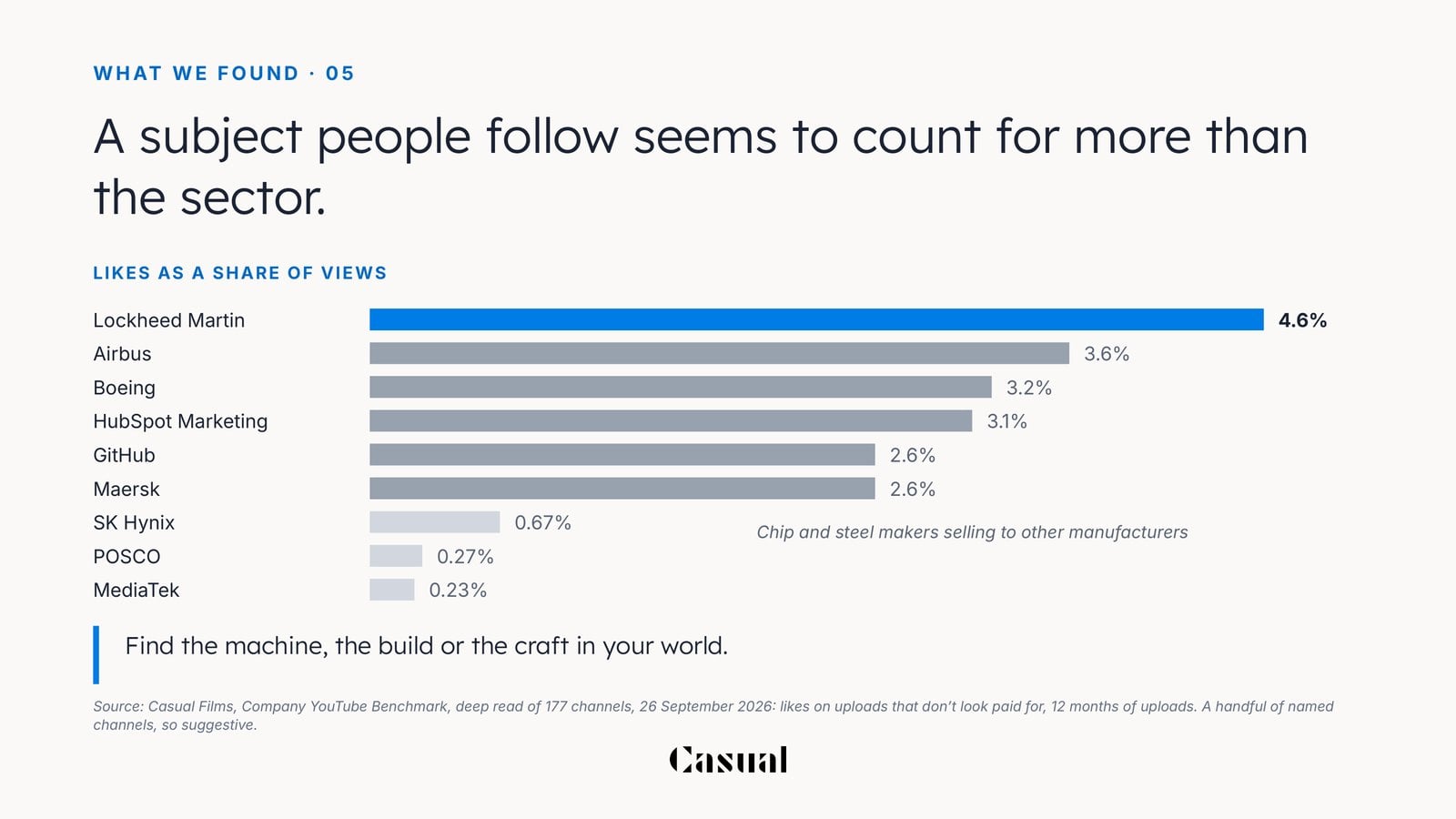
Subject over sector. A subject people follow, a machine, a build or a craft, seems to count for more than the industry.
The YouTube audit
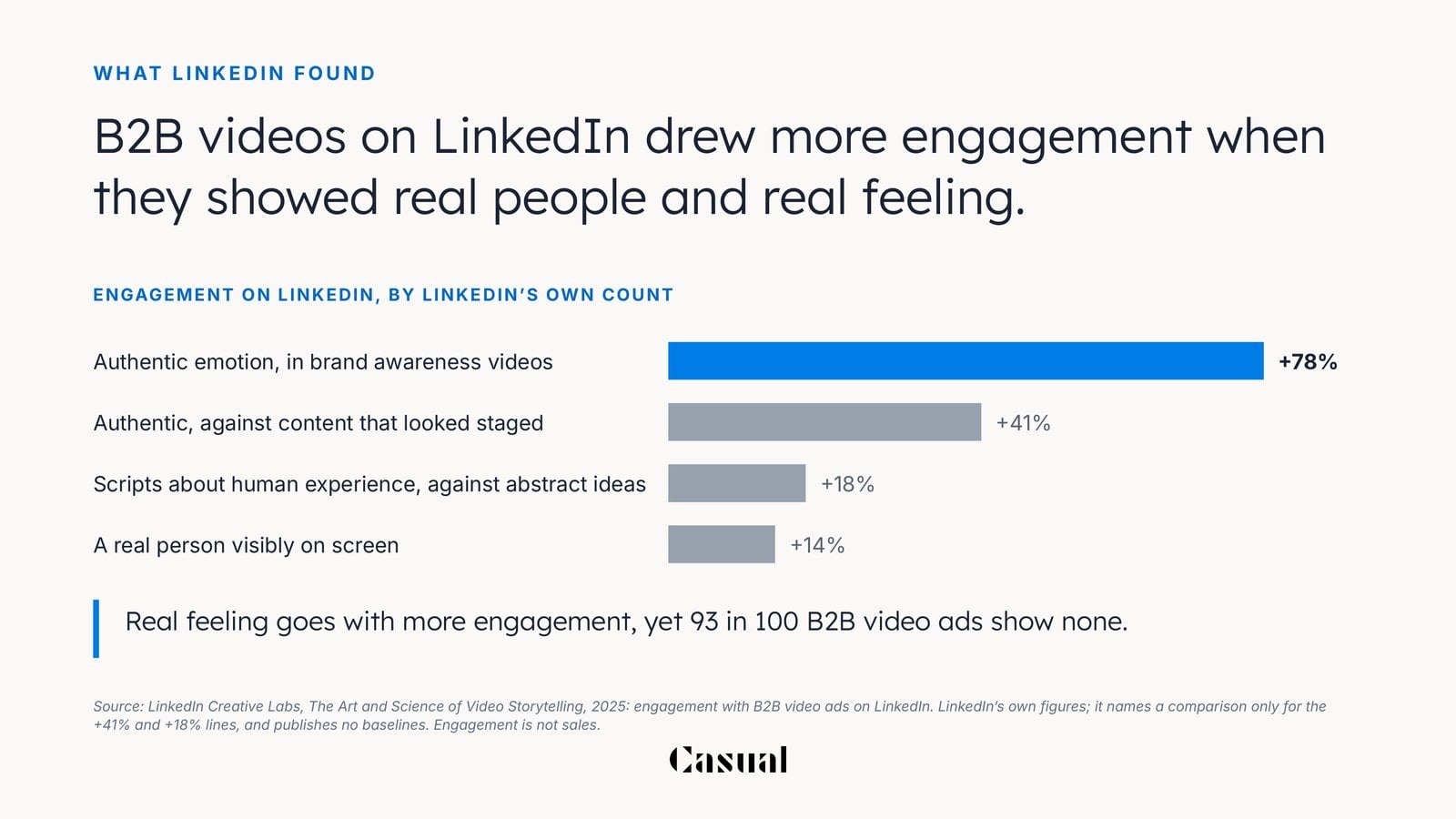
+78% engagement on LinkedIn for brand videos with authentic emotion, by LinkedIn’s own count.
The case for human storytelling
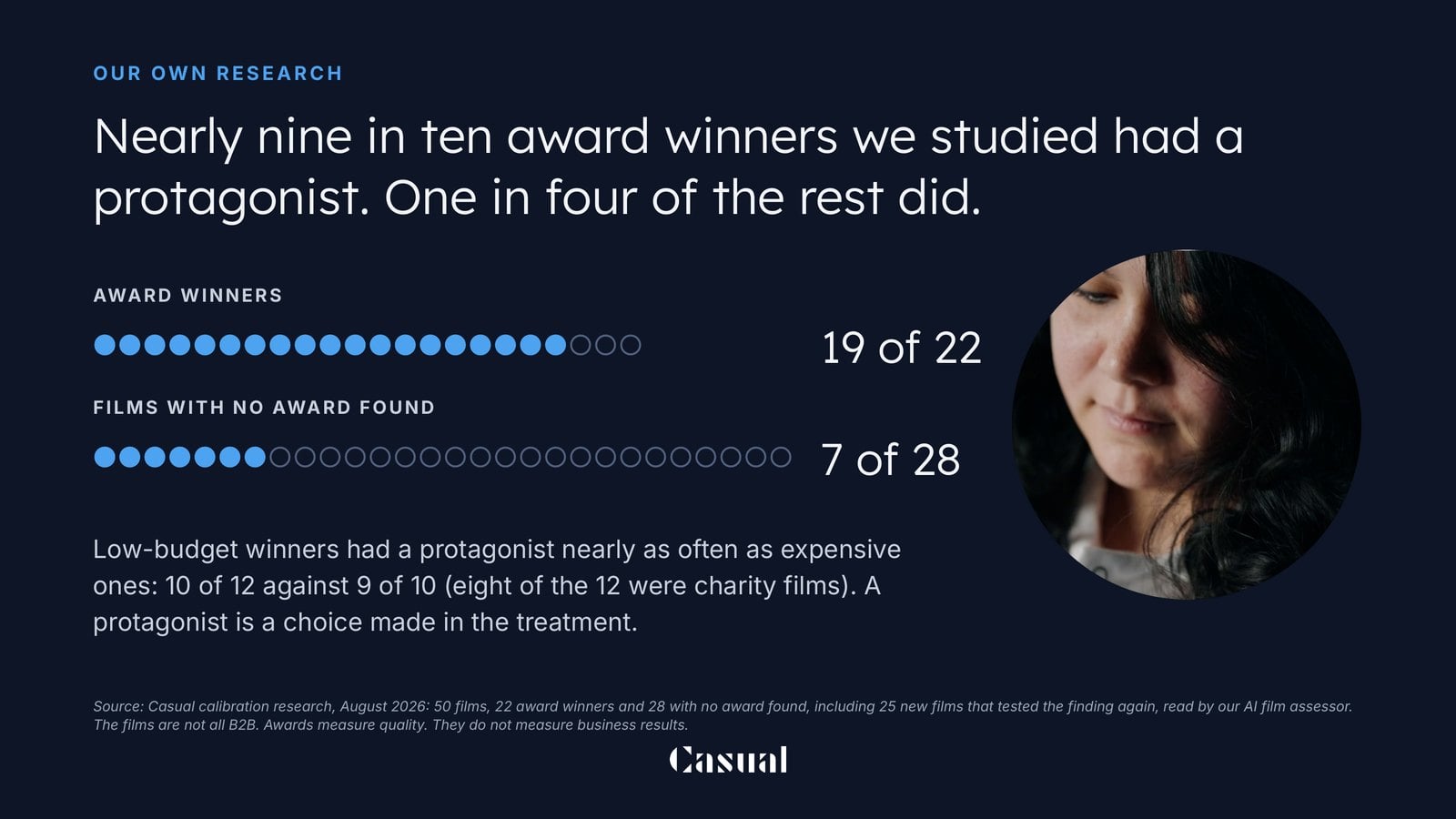
19 of 22 award winners we studied had a protagonist. Of the films with no award found, 7 of 28.
The case for human storytelling
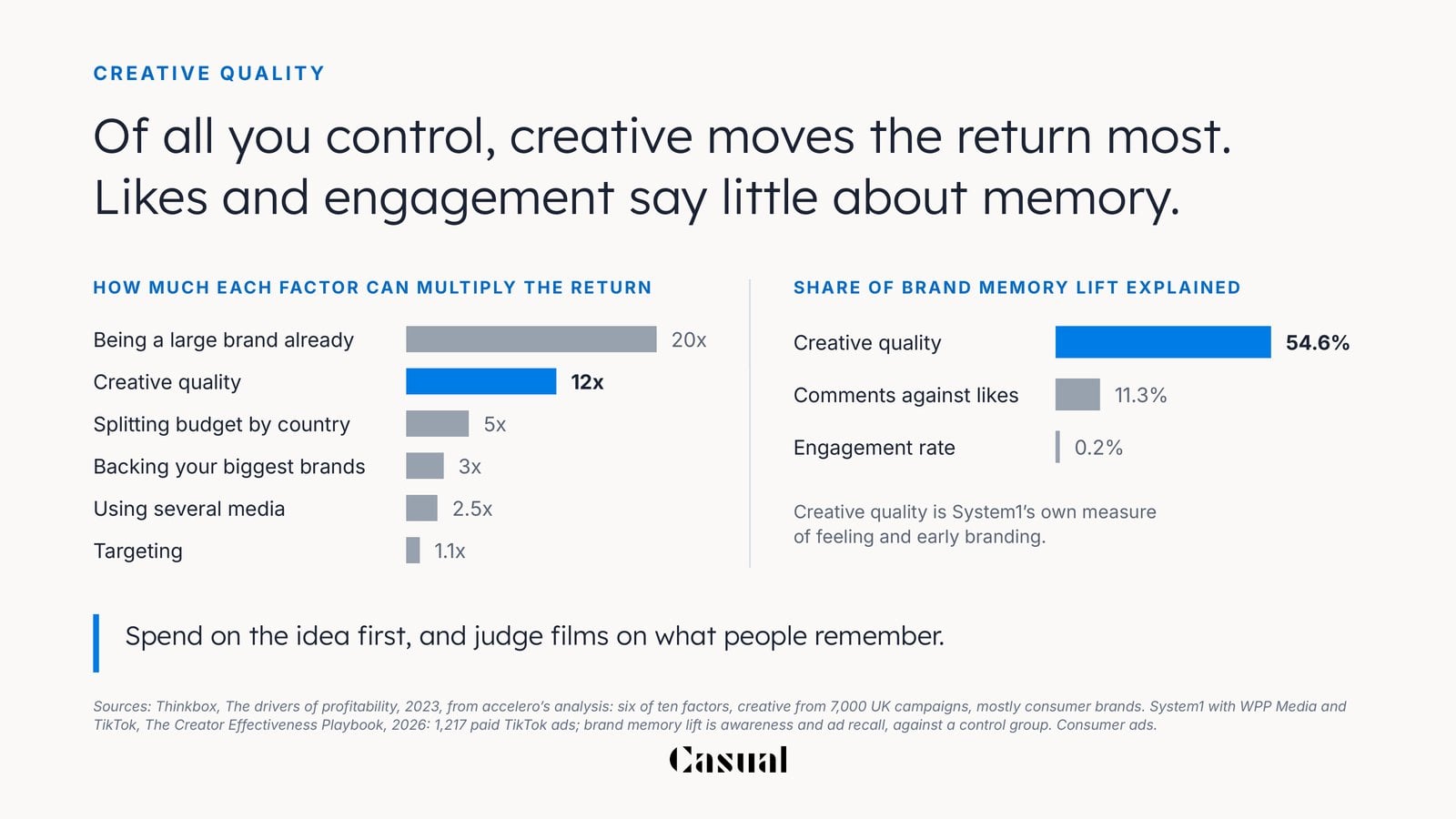
Creative first. Of everything a marketer controls, creative quality moves the return most.
Why it’s worth investing in video
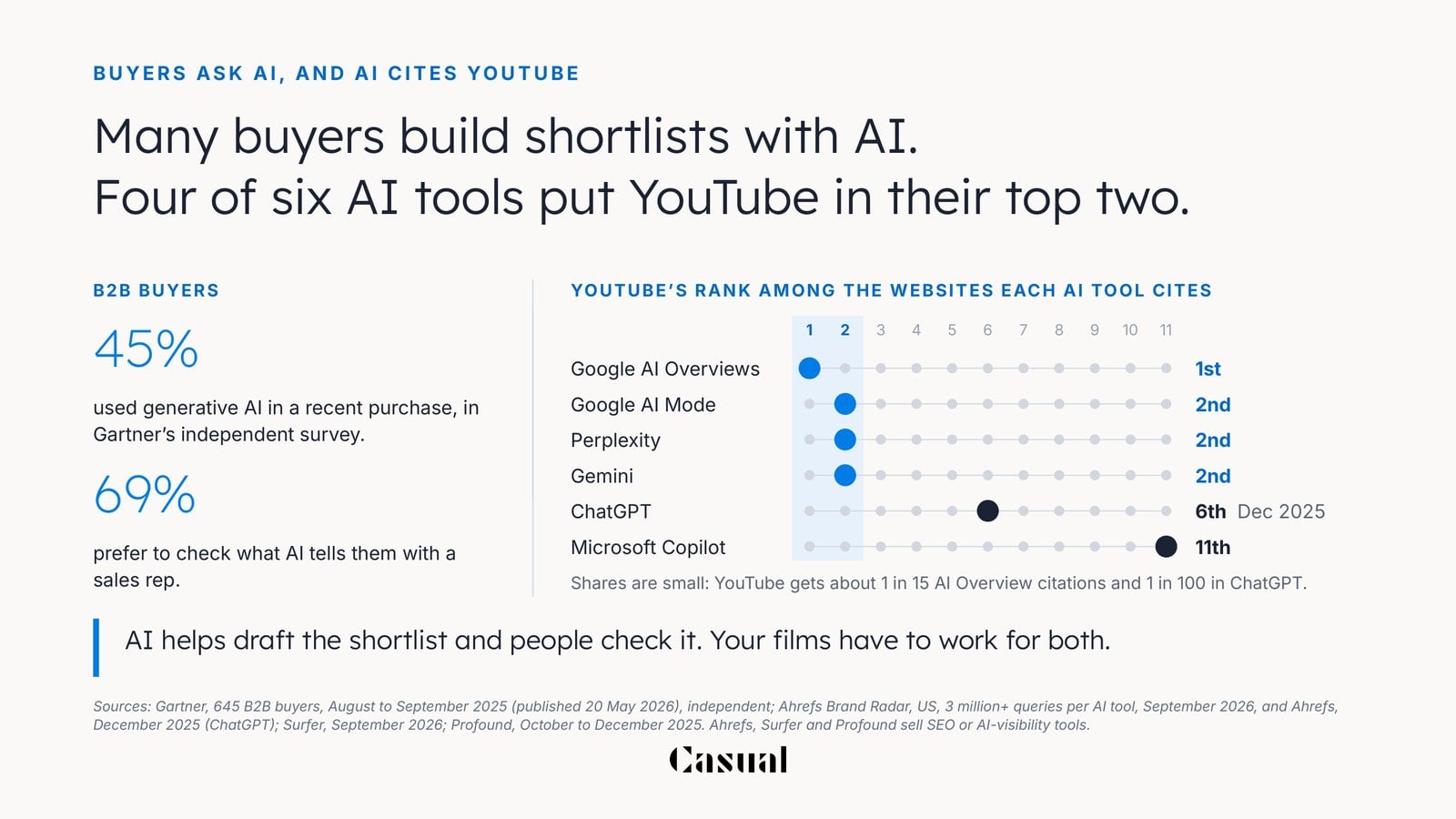
Top 2. Four of six AI tools put YouTube in their top two cited websites.
Video for AI answers and agents
All our research
November 2026 · 11 pages
Why your YouTube channel matters.
Why a channel that only stores past films is a missed chance, and what to do with it instead.
- 15.8% of all US TV-set viewing went to YouTube in August 2026, a record.
- 0.24 uploads a week on the median FTSE 100 B2B channel, against 5.8 for the best channels.
- US$240,000 is what 10 million earned long-form views a year in the US would cost to buy as ads.
For B2B leaders whose channel is an archive of past films, and anyone asked why YouTube should matter.
October 2026 · 12 pages
The YouTube channel audit.
What a year of uploads shows about the films people choose to watch.
- 18.7x the views of the rest of its channel, for one software company’s named show.
- 8 of 15 interview shows beat the rest of their own channel.
- 0.34x the channel median, for uploads of whole-event footage.
For heads of content, social and brand who run a company channel.
October 2026 · 12 pages
The case for human storytelling.
Why B2B film needs more human stories, and how to make them well.
- 7 in 100 B2B video ads on LinkedIn show any human emotion.
- 1.56% against 1.58%: B2B viewers on YouTube like what they watch as often as consumer viewers do.
- 19 of 22 award winners we studied had a protagonist, against 7 of 28 films with no award found.
For brand and creative leads, and anyone writing a brief for a film.
October 2026 · 8 pages
Why it’s worth investing in video.
How film compares with other formats, and why the creative matters more than you’d think.
- 95% of the time, B2B buyers choose from their day-one shortlist.
- 58% of B2B marketers named video among the formats that got their best results.
- 12x how much more the best creative can return than the worst, across about 7,000 UK campaigns.
For people who commission film, and the finance and leadership teams they need to convince.
October 2026 · 8 pages
Video for AI answers and agents.
How ChatGPT, Gemini and Google’s AI answers find, read and cite company films, and what to do about it.
- Top 2: YouTube’s rank among the websites cited by Google’s AI Overviews, AI Mode, Gemini and Perplexity.
- 50% of the YouTube links in Google’s AI Overviews go to a moment inside the video.
- 41% of the YouTube videos AI cited had under 1,000 views.
For marketing, brand and comms leaders whose buyers ask AI before they ask them.
How we do the research
We read the channels ourselves
1,621 company and brand YouTube channels, a year of uploads each, read through YouTube’s own data in September 2026.
A second reader checks every figure
Every single number cited is double-blind checked before we include it.
We remove any stats that don't match up
There are a lot of stats shared around online video which have no basis in fact. We track them, and don't share them.
Twenty years of making films
19,785 films since 2006, from eight offices in seven countries. Our research draws on 5,704 of them, made for 805 clients.