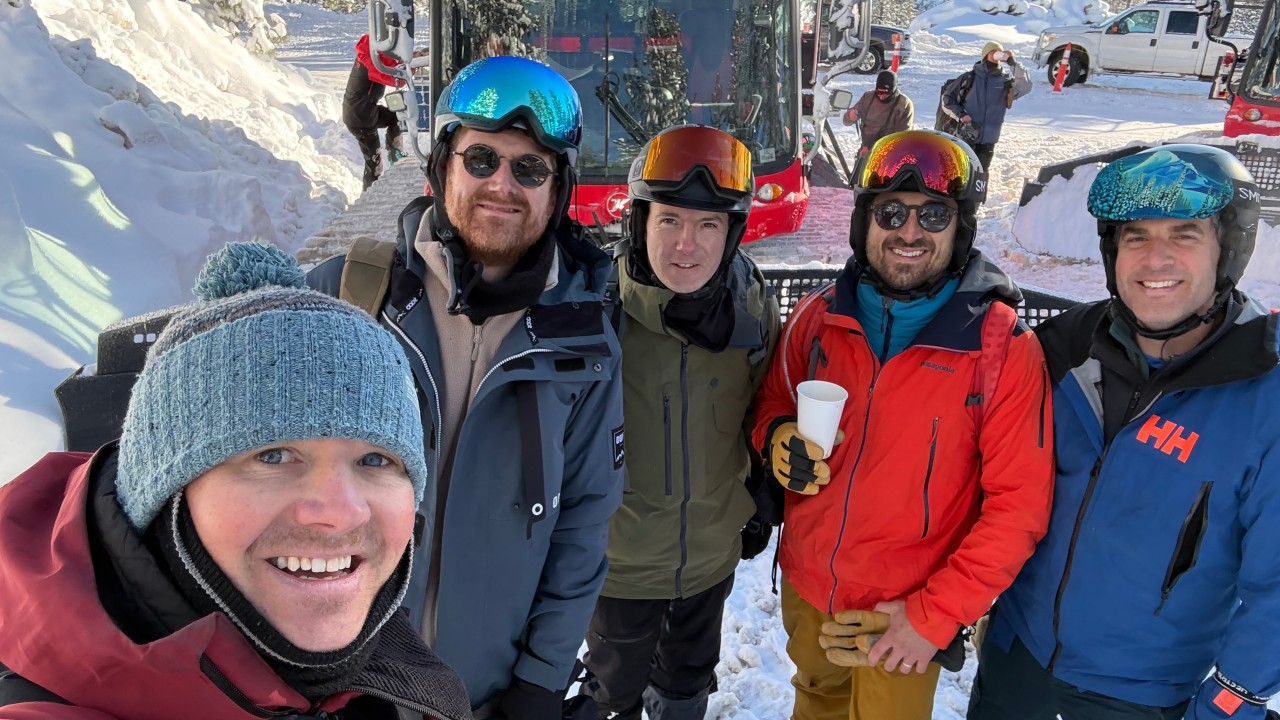
The last run of the day. An absolutely classic time to do it.
We'd picked our way through a forest in fairly poor light and cruddy snow. We came out of the trees into an opening, which ran down towards a deep stream bed that we'd have to cross to the right.
Impact
I dropped in on my snowboard. Went straight through the bumpy snow, looking for a gap to slow down further on.
When I got there, there was no snow, just a drop. Then a tree.
I flew 12 feet through the air at 20mph and wrapped myself straight around it. Board and chest first. Crunch.
If you've ever hurt yourself badly, you know that excruciating moment between the impact and the dark dawn of overpowering sensation.
I couldn't breathe. The pain took what breath I had away. It was all-encompassing.
I slid down the bank to the right, practically unable to move. My mate followed me down and helped take off the board.
After a while, I staggered and slid the last few hundred metres of the run.
The next morning, in the medical centre, after a terrible night's sleep, I found I'd cracked my sixth rib, fractured my manubrium (nope, me neither) and sprained my ankle.
The end of day one of a four-day trip, and I was out of the game.
Down, but not out
We were supposed to be touring the next day: splitboard skinning to the top of the mountain, then riding down.
Not a chance for me. Jet lag plus a union with a tree is not the most conducive combination for sleep.
I was gutted not to be able to go out the next day, but weirdly, I felt positive about it.
That's what I want to focus on today.
If you're going to do something inherently dangerous, then hurting yourself is a bit of an occupational risk. I've been lucky and haven't hurt myself badly for over a decade.
So, on reflection, I was due it...
30 years of broken bones
2026 marks the 30th anniversary of my learning on the Hemel Hempstead dry ski slope (another insane personal milestone for 2026).
In that time, I have lived in the French Alps for two seasons, been an instructor, and travelled to some weird and wonderful places with many equally wonderful and weird people.
I've also broken several bones, compressed my hip, sprained my elbow, been knocked out cold twice, and had more bruises and strains than I can mention.
But you know what?
It has been worth every single one of them.
Worth every ibuprofen
You could say I would be better off staying on the board rather than continually hitting the floor. That is arguably true.
Arguably.
The problem is, you can't make an omelette without breaking eggs, and you can't really be getting amongst it for three decades without cracking ribs.
If you're not falling, you're not improving. Progression is a function of failure.
Snowboarding has given me the most incredible experience of our planet's nature. The thrill of speed and air, the joy of achievement, and the best arena in which to share some of the closest relationships of my life.
Hiking jumps as a kid, skinning up mountains in the deserted backcountry, even skiing their first black run with my girls.
These experiences have been some of the sweetest sugar in my life's coffee.
Don't live life in a blanket
Yes, you can stay at home. Take minimal risks. Live in a blanket.
But life happens when you risk a little. That's true on a mountain. It's true in business.
It's true everywhere.
After all, I have always liked the saying:
"The way you do anything is the way you do everything."
And when it goes wrong, and you hit that (bloody) tree, you've got ibuprofen, ice packs, and maybe a story you can shoehorn into a blog later.
And yes, it still hurts like you wouldn't believe.
(But Mum, if you're reading this, I'm fine.)
This piece first appeared in Beyond Casual, Nick's newsletter on LinkedIn, on 5 March 2026.