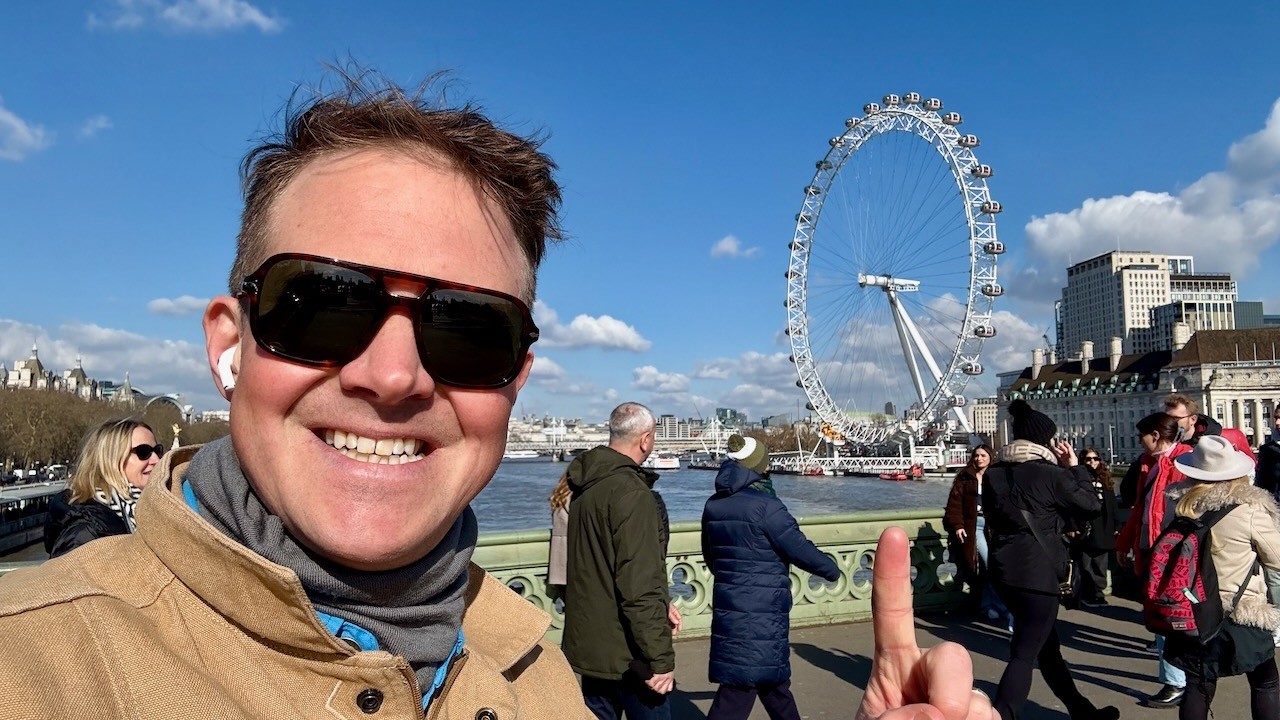
I grew up in London. I love London; in so many ways it shaped me. Returning for the first time in seven months, I couldn't help feeling that it was different from the city I left seven years ago. It wasn't just the beautiful, crisp winter sun.
The intervening period has not been kind to this great city. The one-two punch of Brexit and Covid knocked it down harder than most, and it still doesn't seem to be quite at full strength. This is not a criticism, just an observation and an attempt at analysis from an affectionate Londoner.
Think of the London of the Olympic opening ceremony in 2012: a choir of deaf and hearing children signing the national anthem, the incredible creative history of the country, and our late Queen parachuting out of a helicopter. This was arguably the high-water mark of the Western liberal order. An experience of globalism in which this city was a significant winner.
(There were, of course, many in the UK who watched that and felt like it was happening on another planet, with significant effects in our referendum on European membership just four years later.)
But now that global swagger and confidence seem dented. London is still, of course, London. The parks are beautiful, the restaurants are buzzing and the streets are full. But there is something hard to identify conclusively that is undeniably there, or not there. It feels a bit tired. A bit jaded. A bit like it needs things to flow its way, for once.
The world we live in is harder to predict than I can remember. The last few years have broken my gut feel for business. Could this be our best year ever? Possibly. Could we stumble into another macroeconomic calamity? Potentially that too. It makes planning as hard as I can remember.
Whatever happens, the US, and the US economy in particular, seems to carry a momentum that most nations can only dream of. The reserve status of the dollar creates a "heads I win, tails you lose" pre-eminence that just keeps the economy rolling, no matter what some of the current administration might say, or do, to the contrary.
The entrepreneurialism, the risk tolerance and the ingrained belief that tomorrow can be better than today all combine to keep this colossus driving ever upward.
In California, my American home, the risk-taking, entrepreneurialism and creativity of the rest of the nation are turned up to 11. The brightest and best of not just the country but the whole world travel to this sunny corner of it to build a better life and make their fortunes.
Visiting one city from the other, from the centre of the technology and business world to my original home town, created a stark contrast. So I thought I would share, humbly, what I think creative London needs to do to rediscover the city I know it is and can be again.
1. Cultivate a pro-creative start-up policy environment
San Francisco has built an explosively thriving business ecosystem by integrating venture capital, risk-taking and technology. London, despite its world-leading creative industries, still lacks the start-up-friendly policies and investment structures that fuel rapid innovation in content production and digital media. The UK's tax reliefs for film and high-end TV have worked well, but the same level of support should be extended to smaller, independent creative start-ups working in branded content, digital-first video and AI-driven production.
To truly compete, London needs more accessible funding schemes, streamlined grant processes and incentives for investors backing creative-tech start-ups. Unlocking pension fund capital and late-stage investment for media and entertainment companies would enable more ambitious projects to scale. By aligning public and private funding, cutting unnecessary bureaucracy and treating creative businesses as high-growth start-ups, London can ensure that its creative economy remains world-class.
2. Attract and retain global creative talent
California's creative and tech industries thrive because they attract the world's best talent, offering clear visa pathways and a culture that rewards ambition. London, by contrast, faces a post-Brexit talent drain, making it harder to recruit international creatives and production professionals. The Global Talent visa should be expanded to include video producers, game designers, animators and digital storytellers, so that top creative minds see London as a natural home for their work.
More than just visas, London needs to actively recruit and retain global creatives through incentives for international co-productions, funding for visiting creators and easier access to workspaces. The city's unmatched diversity already makes it a cultural powerhouse. Promoting London as the most accessible and globally connected city for creative professionals would help it keep an edge over rising competitors in Europe and beyond.
3. Foster a risk-tolerant, creative culture
When we first set up our business in New York, clients responded with enthusiasm: our ambition was seen as an asset. In London, that same level of optimism isn't always there. While the city has a rich history of innovation in film, music and advertising, there's still a tendency to play it safe, with many investors hesitant to back risky, experimental or high-concept creative projects.
This mindset has to change. The US has built billion-dollar creative-tech businesses by embracing a "fail forward" culture, where ambitious ideas in streaming, AI-powered video or new media formats get backed even if success isn't guaranteed. London should spotlight and celebrate creative entrepreneurs who take big swings, while making sure that funding structures, incubators and public grants reward risk-taking rather than just safe bets. The future of media belongs to those who push boundaries. London should be the place where they thrive.
4. Supercharge London's role as a global creative production hub
London has long been a powerhouse in film, TV and commercial video production, but to keep its competitive edge, it must continue investing in infrastructure and incentives. The UK's tax relief schemes for film and high-end TV production have successfully attracted Hollywood studios, yet smaller-scale and independent video creators often struggle to access funding or affordable production facilities. Expanding financial support, such as extending tax reliefs to digital-first content for YouTube, streaming platforms and branded content, would help London's production ecosystem thrive at all levels.
Beyond funding, London should invest in state-of-the-art production hubs, like virtual production studios, which are transforming the industry by reducing costs and allowing for more ambitious storytelling. The city can also lead in AI-driven video innovation, supporting start-ups working on real-time rendering, AI-assisted editing and virtual production tools. By positioning itself as a leader in both traditional and digital-first video creation, London can strengthen its appeal to global brands, studios and independent content creators alike.
5. Strengthen London's creative industry export power
London's creative industries, spanning film, advertising, music and design, are among the UK's strongest exports, yet many independent creators struggle to scale internationally. We were helped significantly by UK Trade & Investment (UKTI), the Department for International Trade (DIT) and now the Department for Business and Trade (DBT). Getting to know local networking groups, lawyers and events in potential expansion cities meant we weren't clueless when we landed. That said, there is more that could be done.
The government and industry bodies should set up export accelerator programmes, offering funding, legal guidance and matchmaking to connect London-based companies with global clients. This could be modelled on existing UK trade initiatives but tailored specifically to the creative sector, so that small and mid-sized firms can break into overseas markets. It would at least start to remedy some of the damage done by the changes of the last few years.
I pulled this list together on the plane with real affection for the place. There is so much about London and the UK that is truly fantastic. Coming home and spending a week meeting a huge range of interesting people, I left feeling that more could be done to make the most of the city's creative and innovative culture.
If you have some thoughts on this, I would love to hear them.
This piece first appeared in Beyond Casual, Nick's newsletter on LinkedIn, on 5 March 2025.