
Episode 16, Season 2 examines why brands must earn attention rather than chase it, offering practical brand storytelling lessons for marketers, creatives, leaders, and internal comms teams.
Casual has released the sixteenth episode of its second season of the Audience Connection podcast. The guest is Raelene Metlitzky, Head of Content and Editorial at IAG, Australia's largest insurer, whose brand storytelling initiatives have been recognised by industry awards and picked up by major networks. Hosted by Lydia Chan, the episode examines a central tension in modern marketing: brands are no longer competing only with industry rivals, but with every scroll, notification, and algorithm, at a time when human attention has never been scarcer.
Central to the conversation is Raelene's philosophy that brand storytelling is not the story of your brand, but a story that's on brand. She traces the idea to a childhood in apartheid-era South Africa, listening to her father's ham radio pull in voices from around the world, and to a career spanning theatre, radio, and journalism. The clearest proof is A Fire Inside, the feature-length documentary IAG funded about Australia's Black Summer bushfires. It reached over 50 million people, became a number one film on a major streaming network, and grew into an ecosystem of 900 pieces of content, a book, a school curriculum, and a movement. As Raelene explains, the goal was never a single asset: "what we wanted to build was a community, an advocacy piece, a shared value system." The episode grounds these ideas in real numbers, including attention spans that have fallen from 12 seconds to 8.2 (below a goldfish), and McKinsey's finding of a roughly 25,000% rise in content volume over a decade while watch time stays flat.
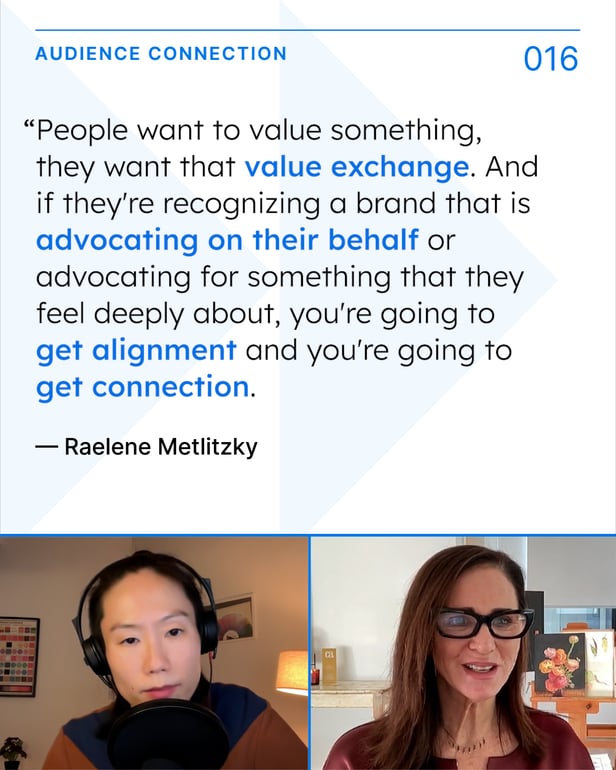 The conversation also addresses how brands should measure success. Raelene argues that the metrics teams prioritise will shape the outcomes they get, and that alignment matters more than reach or eyeballs: "instead of fighting for attention, let's fight for alignment." She makes the case for acts over ads, noting that consumers are four to six times more likely to engage with a brand that advocates on their behalf. She details a Queensland advocacy campaign built around the state's longest and most dangerous highway, delivered with a heritage media partner, that produced the brand's first lift in consideration in 20 years. Her through-line is that trust should be treated as a strategic growth lever, built through small acts and showing up rather than one big gesture, and that the brands that win will be the ones that offer value, not volume.
This episode is available now on all major podcast platforms. Show notes, guest links, and additional resources can be found at Casual's website.