
The Number One risk for business communicators in 2026 is falling into the Efficiency Trap.
Talking to many of our clients about the year ahead, they are staring down the barrel of needing to produce ever more content with less budget.
The trap is that in optimising for volume and cost inputs, you are potentially damaging the desired output - brand trust. The audience's belief and trust in the message.
Your audience doesn’t need more content; they need to understand more. That is a fundamental difference.
All tools lack intention
Barely a week goes by without someone sending me the latest GenAI video model and marvelling at what can be achieved with what is perceived as minimal effort.
These tools are already rewiring the way any communicator worth their salt is working, but they should not be considered a panacea for all things production-related.
Some models are genuinely stunning, but for me, it always comes back to what we have known for years. The best filmmakers make the best films – whether the tool is a DSLR, an iPhone, or the latest, incredible Seedance GenAI Model.
The major issue with any tool comes down to intention, or lack thereof.
Building an effective transformation
Think of a major business transformation as building a cathedral.
To the stone mason wielding a hammer, chisel, and human-powered crane, the implementation of modern technology would seem like witchcraft.
A faster crane and powered tools would significantly increase the speed of work, but that work still relies on the mason’s skill to be used effectively.
The tools themselves will move and cut the stone, but they don’t care whether the cathedral stands for 1,000 years or until next week.
The tool, obviously, has no skin in the game.

Westminster Abbey, London. Stone masons of the 13th century would have excelled
with modern tools, given the chance.
High-quality GenAI visuals are amazing. A ‘crane’ of incredible speed and dexterity. But it cannot be relied on to build the 'cathedral' of lasting emotional resonance. The essential building block of trust and effective transformation.
So what gives?
Scaling inputs at the expense of outputs
“Begin with the End in Mind”
- Stephen Covey, Seven Habits of Highly Effective People
You don’t need to scale inputs; we need to scale outputs.
In a transformation, the CEO doesn’t need a video or a suite of videos; they need an outcome. That outcome is an understanding of the desired end state and the trust of those involved in delivering it.
If all you're aiming for are the inputs, then algorithmic scaling makes sense. But optimising inputs, without considering outputs, is clearly idiotic.
This is why it is a category mistake to believe that all video work is simply a commodity.
The use of the tools may be, but the ability to understand business problems, identify the beliefs that underpin them, and the stories that can influence those beliefs are anything but.
Humans will always tell the best stories
It is instructive to look at how the leading AI companies are using GenAI products. Take the excellent Anthropic OpenAI takedown ads. They’re funny, memorable, and incisive.
And most tellingly, they are written, produced, performed, filmed, and edited by humans. Fundamentally human attributes like wit and irony cannot be replicated by AI.
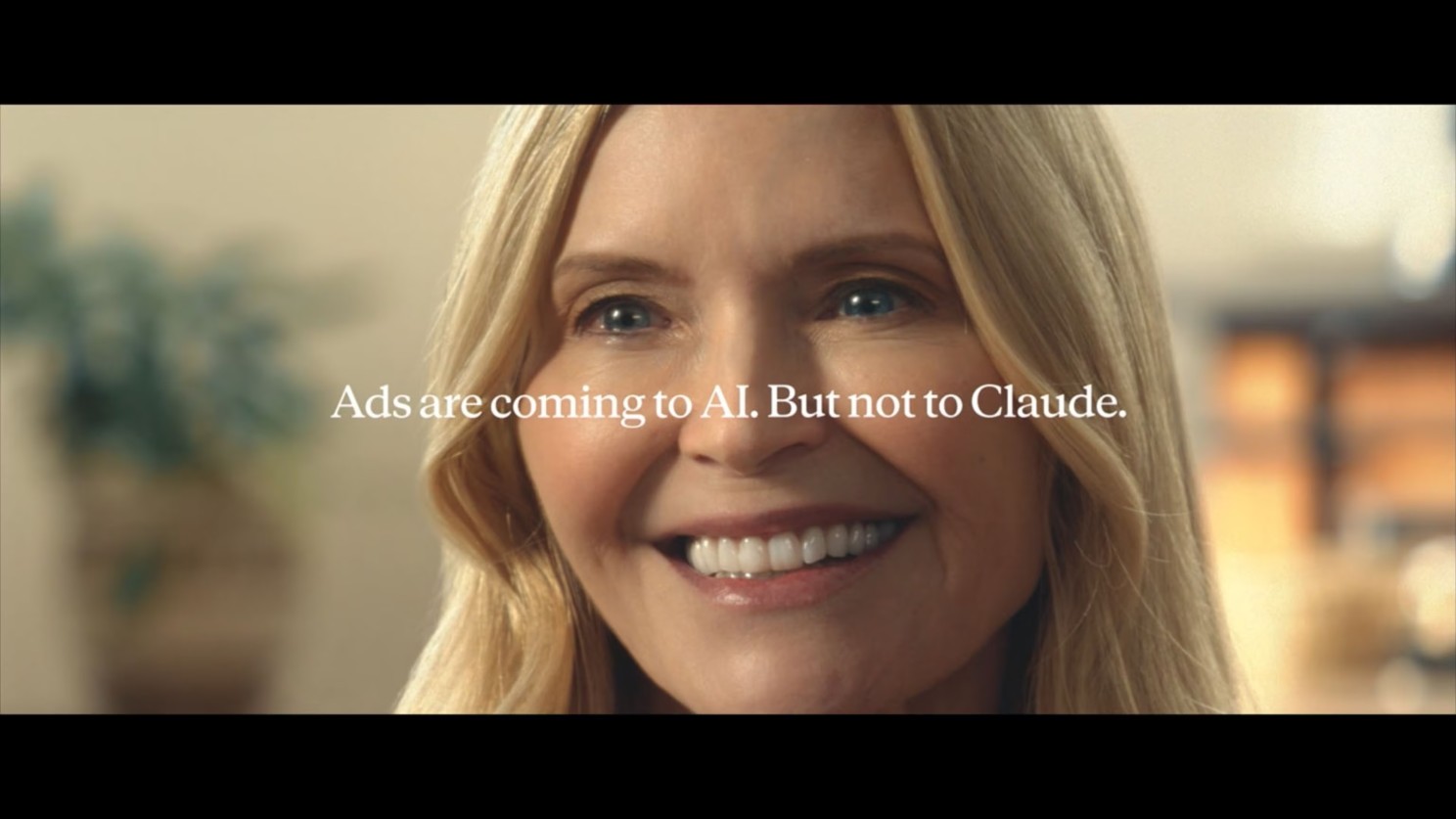
The human acting in the latest Anthropic is so good you'd be forgiven for thinking they're robots!
The fact is that the preeminent companies in this very sector know what far too few other communicators seem to realise: when it has to work, it (still) has to be human.
Due to the Uncanny Valley effect, when a message feels 95% human, the audience spends all their energy focusing on the 5% that's fake. In a transformation, you can't afford that distraction.
Working with a strategic filter
They were also produced by an external partner.
An external partner who is able to see through the internal politics, avoid drinking the corporate Kool Aid, and draw on the best practitioners to create something genuinely excellent.
An invaluable strategic filter and partner, not just a faster crane.
Why is that important?
Media as Cultural Flywheel
In the recent Dentsu CMO Navigator Study, 90% of CMOs are using AI to improve efficiency. That makes complete sense.
The most successful 'Perceptive CMOs' though - those driving double-digit growth - are those who treat media not as a channel for volume, but as a flywheel for culture.
The focus is not just on faster ways to produce, but on ways to connect more deeply with their audiences.
This is why an overwhelming number of them, 87%, are looking for ways to differentiate in what is perceived as a sea of sameness, as everyone races to use the same tools.
Human narratives win the Super Bowl - and Internal Comms!
Which is why the 2026 Super Bowl commercials, which performed best in the USA Today’s Ad Meter, were the ones that featured human narratives.
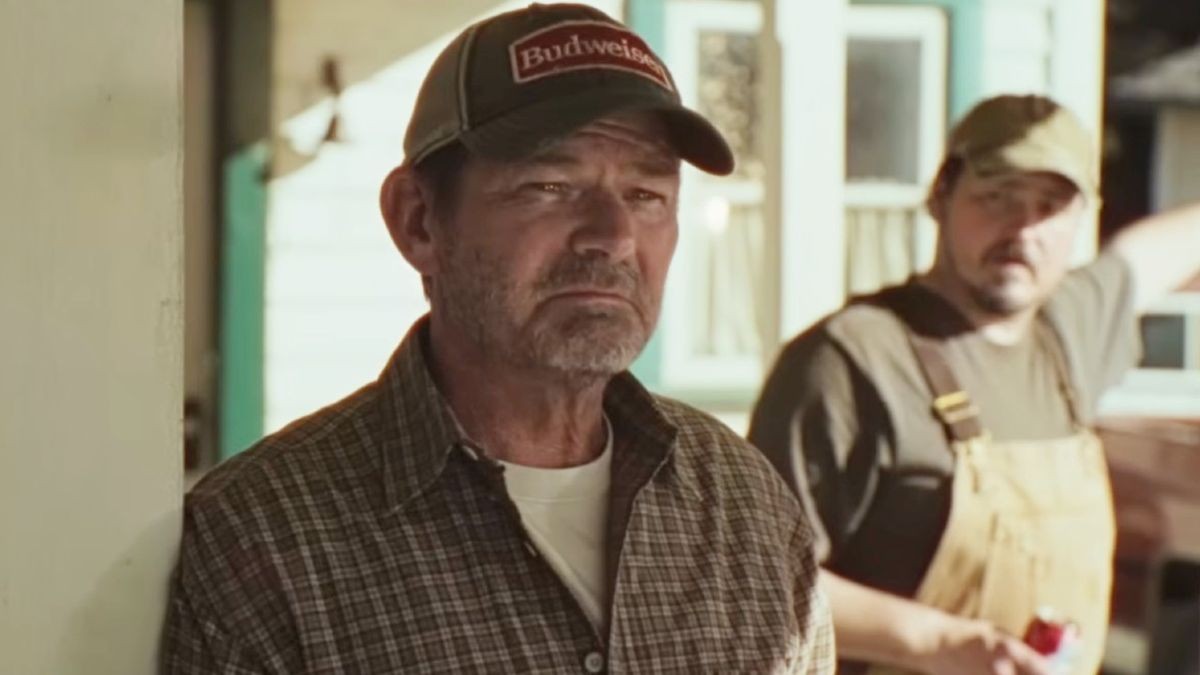
Budweiser's Super Bowl Commercial was a masterclass in cinematic storytelling
Budweiser’s 'American Icons' (score 4.0) was built on cinematic storytelling and a real horse. Lay’s 'Last Harvest' focused on a father-daughter relationship. They focused on resonance.
It might be tempting to argue that this is obviously content at the highest level and therefore deserves this level of treatment.
The fact is that every piece of content has to win its own mini-Super Bowl-style battle for attention.
I’ve spoken to internal communications leaders who complain that no one ever watches their content. No wonder. Look at the majority of it!
Beware the Trap!
Ultimately, the temptation to prioritise the crane over the mason has never been stronger. In an era where "good enough" content has never been more accessible, the Efficiency Trap looks like the answer to the most pressing question for so many of our clients: “How can I produce all this work I am being asked for?!”
But are you scaling inputs at the cost of the output?
Build for the future
If you are leading an organisation through a critical transformation, the question isn’t whether you should use these new tools; you should.
The question is whether you are building for the sake of it - to add to the noise - or to genuinely cut through to your audience?
The tools of 2026 can move mountains of data and generate oceans of content, but they cannot care about the result. They cannot feel the weight of a promise or the value of a shared culture. Only you can do that.
In a world of infinite, automated noise, the most radical and effective thing you can do is stay real. Because in the end, people don’t follow algorithms into the future.
They follow leaders they trust.