Attention, not code, is the limited resource
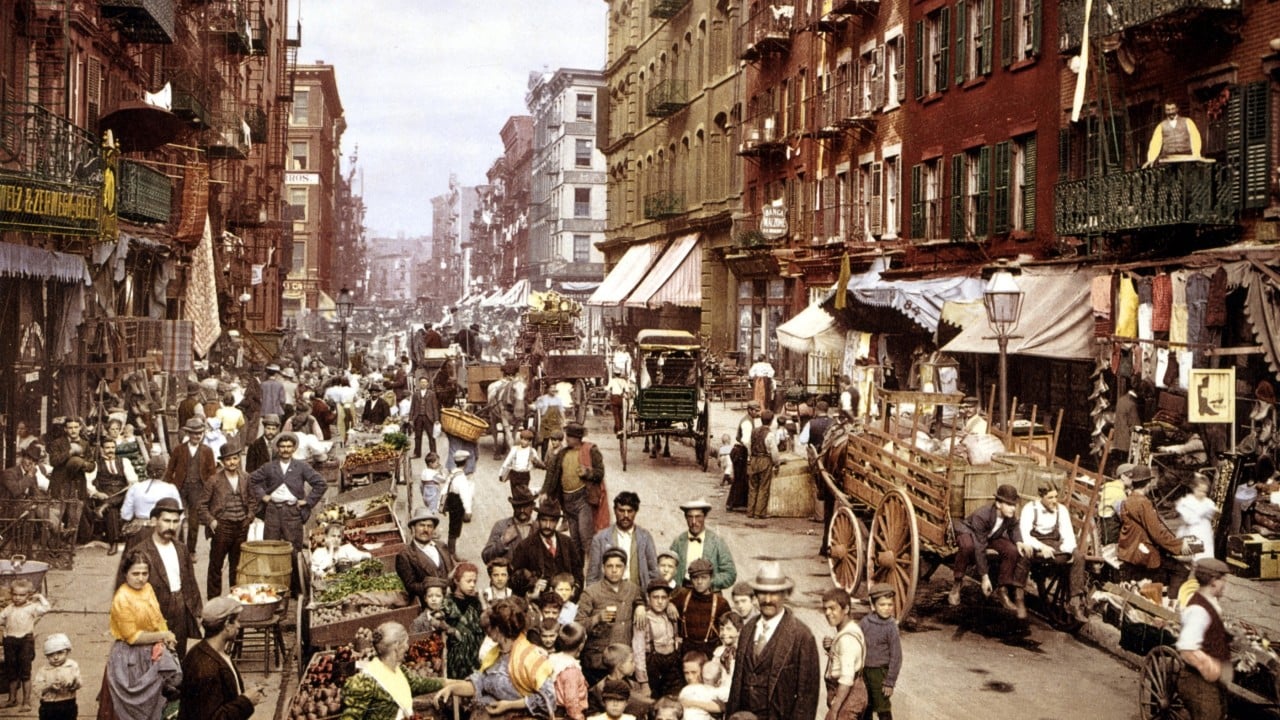
In 1898, delegates gathered in New York for what is often called the first international urban planning conference. Exciting. At the top of the agenda: horse manure.
At the time, New York City had around 200,000 horses. Each produced up to thirty pounds of waste a day. That's a whole load of poop.
One widely-cited warning from 1894 had predicted that London would, by the 1950s, be buried nine feet deep.
The delegates conferred for ten days, sharing many weird and wonderful ideas. But, they could not solve it. The conference adjourned early - in failure.
Fifteen years later, the problem had quietly disappeared. Not because anyone had cracked it. But because the internal combustion engine had arrived and rendered the question moot.
The smartest people in the field could not see what was just around the corner.
The chokepoint has moved
Right now, there is a similar shift happening inside business. For two decades, the chokepoint for most tech-aspirant companies has been engineering. That is changing.
Realistically, engineers are not going anywhere. Some engineers are paid in the millions of dollars a year. The good ones will always be in demand, and the best will always have leverage.
What has moved is where the scarcity sits. The constraint used to be building the thing. The constraint now is getting anyone to notice that the thing exists.
Attention, not code, is the limited resource.
Apparently, two hundred thousand apps are being uploaded to the Apple App Store every week. That is an 80+ percent increase in a matter of months. Shipping a functional product has gone from moonshot to afternoon project.
Attention, not code, is the limited resource. The harder question is not whether you can build it, but whether anyone will notice.
At the same time, marketing itself is getting crappier just as it matters more. AI generates slop at an industrial scale. LinkedIn has converged on one voice, with all the same AI tells. The baseline has dropped right as the value of the best, most effective work has climbed.
The Valley's old religion
One of the things that struck me when I first moved to San Francisco 8 years ago was a strange disdain for marketing. The prevailing belief was that if you needed marketing, your product was not good enough.
This was and is clearly nonsense – each year, the highest spenders for Super Bowl ads are tech companies.
The high priest of Silicon Valley – Steve Jobs – was, if anything, a marketing genius.
Still, the aphorism often attributed to the Google founders went something like: "If we need marketing, [our product] will have failed."
It was a lovely idea. It worked for a time because the general scarcity of well-engineered products meant the ones that worked tended to get noticed.
That era is over.
A revolution in means
In my 2018 book, The New Fire, I argued something I still believe strongly: a revolution in means requires a revolution in strategy.
I was writing about video. Cameras had moved into every pocket. The scarcity had moved from capture to idea.
The pattern is identical now, one layer up. Anyone can ship a product. The scarcity has moved from build to belief.
The company that can tell the clearest, most resonant story about why its product matters will beat the company with slightly better engineering and no story to tell.
The harder question is no longer "can you build it?", but "can you make anyone care about it?"
Back to the manure
The delegates in 1898 were not stupid. They were working on the right problem with the best information they had. They missed that it was about to be solved from outside their frame.
I suspect we are in a similar moment. A lot of businesses are still trying to win on engineering alone. That strategy worked when shipping was hard.
The companies that only double down on product will be outflanked by the ones that figured out how to make people feel something.
The jobs we cannot imagine
The new jobs are coming. We cannot prefigure them exactly. In 1898, nobody could have predicted drive-through coffee or highway patrol outriders.
In 2026, we are probably wrong in similar ways about what the next two decades (or years?) will look like.
But the shape of it is clear. Awareness and attention are the chokepoints now. The companies that get serious about storytelling will be the ones that look, in hindsight, like they saw it coming.
What is about to stop being the chokepoint in your industry? And what will replace it?
I would love to hear it. Even if you think I am talking crap.
See you next time.