
One of the most damaging trends of the last decade is the way our shared humanity has been subsumed by division, "othering," and rage. Through the lens of narrative, the diagnosis is clear:
The negative story of society is challenging the positive.
All stories ebb and flow in primacy. For a long time, the dominant story was one of communitarian expansion - the idea that we are one people who collectively benefit when everyone succeeds.
Since the Great Financial Crash, with growing inequality, money in politics, and misplaced economic policy, that story has receded.
Rebuilding, reclaiming, and retelling this story is the defining challenge of our time.
The Technology of Empathy
In The Better Angels of Our Nature, Steven Pinker argues that the invention of the printing press did more than just spread information; it spread empathy.
As literacy rose, the novel allowed people to step inside the minds of those across borders and social classes.
This "Expanding Circle" of concern created the psychological foundation for the Humanitarian Revolution of the 17th century. We didn't just learn to read; we learned to feel for people we would never meet.
This led to three centuries of reduced rates of violent crime, war, and sectarianism.
The Moral Underpinnings of Western Society
But where did those values of empathy come from? In Dominion, historian and podcaster, Tom Holland argues that the "secular" values we prize - human rights, equality, and compassion - are not "natural" or self-evident.
They are the 2,000-year-old echoes of a single, powerful story about a carpenter from the Eastern Mediterranean.
According to Holland, whether you are a believer or a staunch atheist, we live within a moral framework grounded in the teachings of the Christian narrative. It provided the "code" for modern Western civilization.
Following the global conflagrations of the 20th century, we used that code to build international institutions grounded in unity, stability, and shared security.
The Collapse of the "Big Story"
Unfortunately, these grand narratives – among others - have lost ground.
In our current digital age, the "Novel" - which enables deep immersion in another’s soul - has been replaced by the "Feed" - which banishes nuance and encourages instant judgment of another’s profile.
The Mad Men of the 20th Century taught us that “Sex Sells”. It took the algorithms of the 21st to discover that rage sells even better. With the fateful decision by the platforms to ground their economic model in advertising, the world’s attention was commoditised.
Anything that kept ‘users’ engaged, staring blankly, ‘infinity scrolling’ to oblivion was optimised.
 60 years ago, the world's greatest minds strove for the Giant Leap of humanity on the moon. Now they work to maximise their fellow humans' screentime and data monetisation
Too much has already been written on the populist politicians who seek power through division, but they have been quick to seize on the potential for division and the discontent of uneven progress, unfairness, and immigration.
We have traded the Expanding Circle for the Echo Chamber.
The rabbit hole of doom beckoned and a large part of our shared consciousness, humanity and society fell into it.
We Must Tell a New Story of Humanism
We find ourselves at a crossroads.
The tools that were promised to connect us - our digital feeds, our global networks, our instant video - are rapidly dismantling the "Expanding Circle" that we spent centuries building.
But if stories drove us towards this mess, stories are a tool to help get us out.
To reclaim our shared humanity, we must commit to a New Humanism in Narrative.
What might that look like?
Reject the Caricature for the Character
Rage lives in the abstract; empathy lives in the specific.
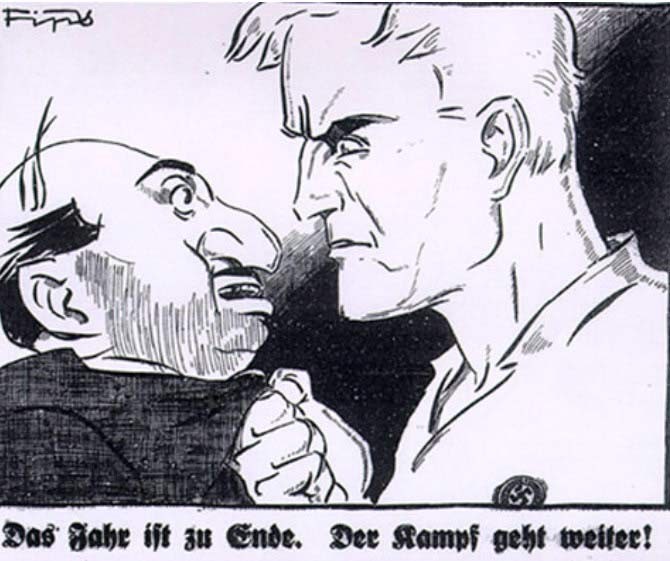 Dehumanising caricatures of sections of society paved the way for the murder of millions of people during the Holocaust. We must wake up and recognise this tendency in modern discourse.
We must stop telling stories about "groups" and start telling stories about people. With anti-immigration, for instance, we see voters who understandably want control in the macro, but quaver at the detention of the friendly undocumented restaurant owner in town.
The law is the law, of course, but the perception of the ‘other’ exists in caricatured masses, far less with individuals.
We must use stories to give face to the faceless.
Use Your Power
We all now have a voice – from our work, to the people we see in our communities, to our online communities. Don’t amplify division; use your vantage point to communicate in a way that brings us together. Tell positive stories and shine a light on the intricacies that make us human.
You have the tools, so use them.
Move from Consumption to Connection
We must stop producing "content" that engenders judgment and produce "connection" that is designed to be felt.
If the 18th-century novel could spark a Humanitarian Revolution, then 21st-century film - the most visceral empathy-machine ever invented - can spark a reunification.
Look for a deeper understanding. Read books rather than feeds. Find and tell stories of shared experience in your business and your personal life. Accentuate the human in everything you do. You will be a better communicator for it.
This is the Greatest Challenge of Our Time
No one person, nor programme, is capable of achieving this alone. It will be accomplished with a hundred billion small actions, hesitations, and hand claps.
This is a hugely positive endeavour, one we should grasp with ambition, optimism and resolve.
This might all seem a little idealistic, but I firmly believe we all have a role to play. Rebuilding the story of "Us" is not a soft, sentimental task.
It is the most urgent, high-stakes creative project of our lifetime. We are one people, on one planet, facing planet-wide existential problems, which cannot be solved by any one nation or people acting alone.
We do not have the luxury of not getting on.
It is time we made the positive story of humanity undeniable again.