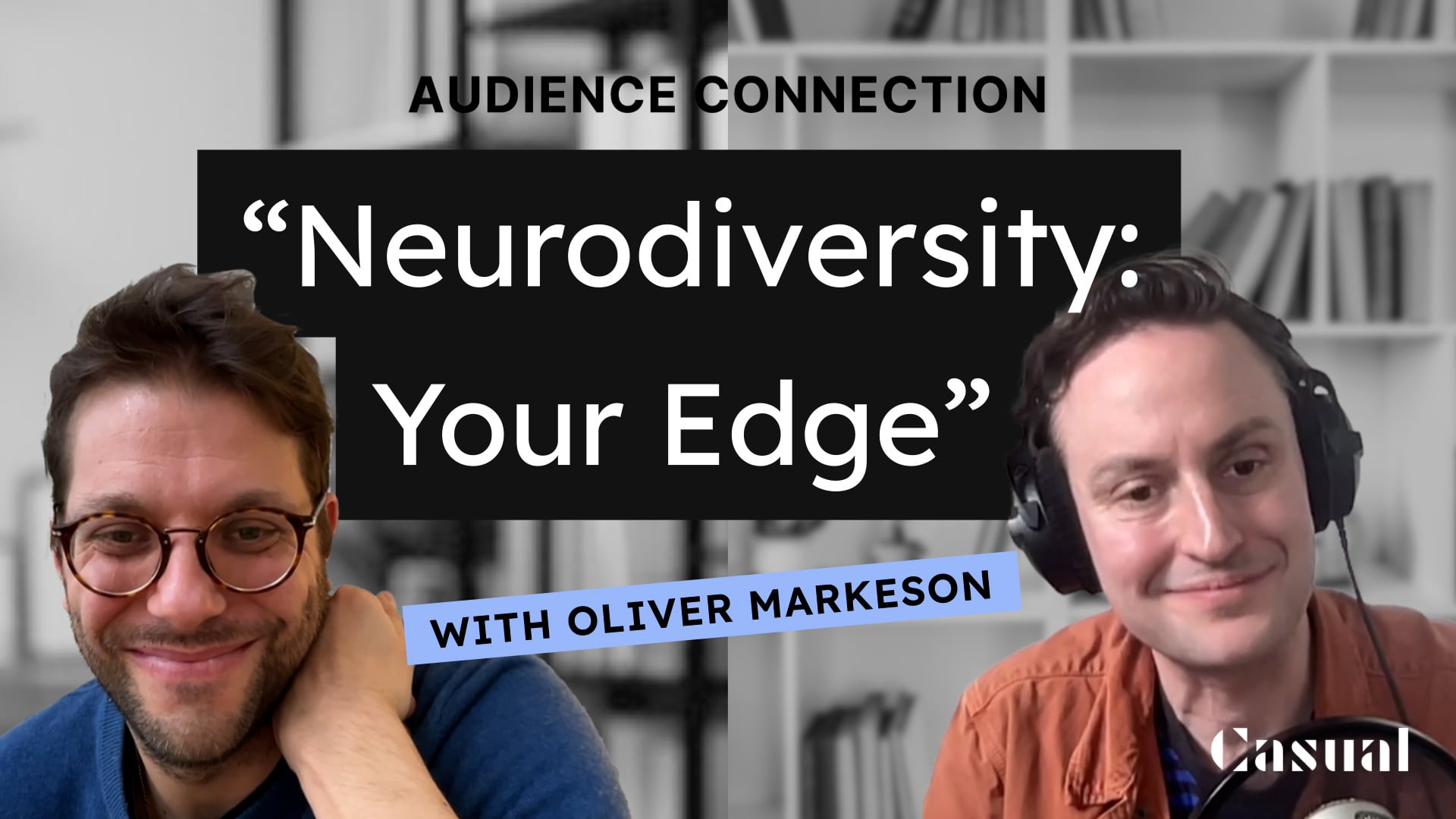
To mark Neurodiversity Celebration Week, Oliver Atkinson sits down with Oliver Markeson, CEO and Co-Founder of Neurohaus, to explore why neuroinclusive design is not a niche fix but a smarter way to build calmer, clearer audience experiences that work better for everyone.
Oliver's starting point is personal. A late diagnosis made him look differently at the world around him, at the way people shop, work, and move through spaces, and ask why so much of it feels unnecessarily hard. That question became Neurohaus, and a body of work with brands like Pandora and Versace that proves neuroinclusive design isn't a niche fix. It's just a smarter design.
In this episode, he gets specific. He talks about the "triggers" that create overload, the queue barriers that send autistic shoppers turning right to avoid them, and the "glimmers" that do the opposite: small, sensory moments so well-considered they can make an airport feel genuinely playful. His core argument is disarmingly simple: reduce friction, simplify information, and stop making people raise their hand just to get a better experience.
With one in five people neurodivergent, this isn't a niche conversation. It's a commercial one. Fewer abandoned journeys, stronger retention, brands people actually trust, the business case and the human case turn out to be the same case.
If you work in marketing, design, retail, or internal comms, this one's worth your full attention.