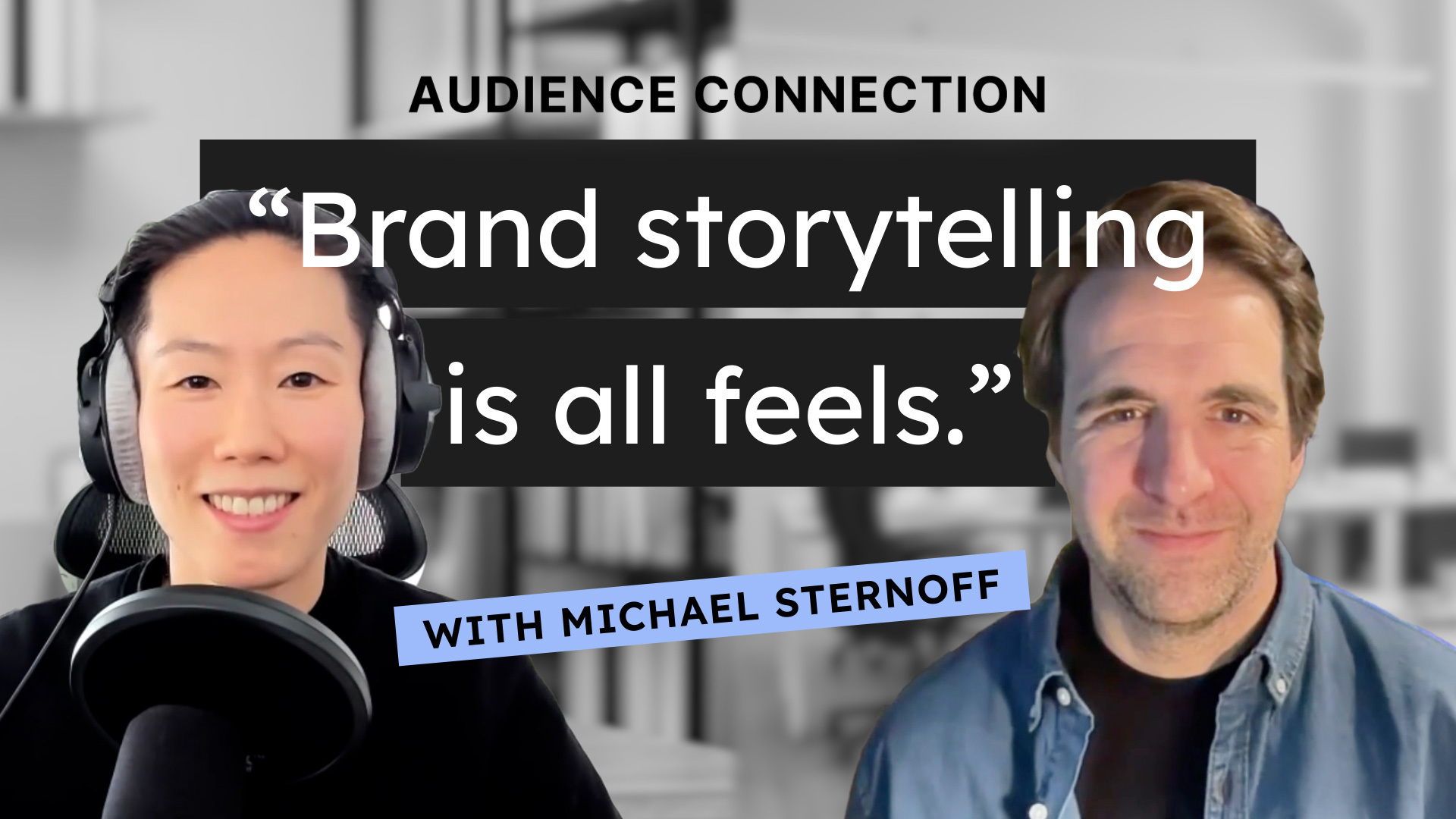
A Count Down to Connection with Amazon LEO's Global CD Michael Sternoff
This podcast episode features Michael Sternoff, Global Creative Director at Amazon Leo (Amazon's low-Earth orbit satellite network). Michael shares his diverse background, spanning Emmy-winning filmmaking and video game trailers, highlighting how these experiences shaped his approach to making technical concepts feel human and authentic. The discussion centers on the launch of Amazon Leo's brand film, "Countdown," which uses right-brain storytelling to showcase real-world impacts of connectivity, emphasizing authenticity through casting and rooted use cases. Michael also offers insights into brand building, prioritizing audience connection and consistent storytelling over short-term analytics, and the importance of creative resilience in a dynamic environment.
Key Takeaways:
* 04:14 - Everyone Has a Story Everywhere: The foundational lesson from Michael's Montana days—spend time understanding your audience before figuring out what story to tell them
* 18:52 - Planning Is Everything: At big companies, start creative development early with remaining budget to build stakeholder trust and test ideas before launch pressure hits
* 23:04 - The Frogger Approach to Creative Blocks: You'll always get blocked somewhere—the solution is to keep moving forward by staying flexible, not stopping or erasing the whiteboard
* 28:59 - Cast Real People for Authentic Details: Having people who actually live the experience on set fills in authenticity you can't fake—they know which details matter
* 33:16 - One Decision Maker Over a Million Views: Brand storytelling isn't about view counts—focused attention from the right person can be more valuable than massive reach
Podcast Transcript
00:00:01:22 - 00:00:08:15
Oliver
This is the Audience Connection, the podcast where we go beyond what connects and into why it actually sticks.
00:00:08:21 - 00:00:19:10
Lydia
Episodes are grounded in both research and real world experience, unpacking what's behind audience behavior, from psychology and neuroscience to cultural cues and decision making.
00:00:19:13 - 00:00:28:16
Oliver
And then we ground all those principles into real world applications, so you understand exactly how to create stories that are memorable and change behavior.
00:00:28:20 - 00:00:36:18
Lydia
We talk to brands, storytellers, behavior scientists, and communication leaders about the real drivers of attention, trust, and action.
00:00:36:20 - 00:00:42:16
Oliver
Sponsored by casual, where behavioral science meets storytelling to build trust for your audiences.
00:00:43:02 - 00:00:46:20
Lydia
Where are your hosts? Ali Atkinson and Lydia Chan.
00:00:46:20 - 00:01:06:17
Oliver
Hi everyone, and welcome back to the audience Connection. So, Lydia, you sat down with Michael Stern off global creative director at Amazon Leo, which is Amazon's low-Earth orbit satellite network. And what an interesting background Michael has. I mean, it ranges from Emmy Award winning filmmaking through to video game trailers.
00:01:06:19 - 00:01:32:17
Lydia
Yeah, it's really interesting when you think about, the various different jobs creatives and filmmakers have taken on in their past lives. And, as I don't know, I think it's that diversity of experiences that really infuse, you know, into our work and makes it uniquely ours. Right. So, I loved how all those chapters in Michael's career really shaped his approach to storytelling.
00:01:32:19 - 00:01:54:12
Oliver
Yeah. And Michael talks about learning early that everyone has a story and you can find one anywhere, and you can hear that in the way he makes incredibly technical things at Amazon. Leo feel genuinely human and authentic. And what I think's great about this episode is you guys dive into a very specific project, which is the new brand launching for Amazon.
00:01:54:12 - 00:02:11:04
Oliver
Leo and I love it when we do that on the podcast. And for those who are listening, we have a link to the film in the show notes. So do have a watch because we talk a lot about the left and right brain side of things on this show, and this project is definitely right brain focused, for sure.
00:02:11:04 - 00:02:30:15
Lydia
It's it's a cool film that really captures the mission of Amazon. Leo. But also it authentically represents the people that Amazon Leo impacts. And Michael breaks down the process for us and how they approach this project and maintain that authenticity while producing something quite cinematic.
00:02:30:17 - 00:02:49:01
Oliver
Yeah. And also, there's there's tons of great creative philosophy in this one. I love it when Michael says brand storytelling is all feels and you can always measure it, but you can absolutely sense when it's working. Okay, all right, that's enough for us. Let's dive in. Here's Lydia with Michael Stern of.
00:02:54:14 - 00:03:23:01
Lydia
Michael, welcome to the show. I am really looking forward to our conversation today. Because your background is just so rich in visual storytelling, right? You're an Emmy Award winning filmmaker. You've had many Emmy nominations as a, director of photography and also directed video game trailers. So now you find yourself telling stories at one of the largest tech companies in the world.
00:03:23:03 - 00:03:30:19
Lydia
Tell us a little bit about your background and how you got to being the global creative director at Amazon, Leo, which was formerly Amazon Kuiper.
00:03:30:21 - 00:03:50:08
Michael
Yeah. I was actually, thinking about, you know, how do you get to a point in your life? And, I was going through some old boxes and like, from, like sixth grade and actually had, like, way back then, we had, like, a journalism radio show, like, it was like a live to tape and my sixth grade class.
00:03:50:08 - 00:04:14:17
Michael
And then by high school, I got more and more into, like, I worked on the school newspaper, and that took me to the university Montana, where, I was very much focused on like video production kind of news storytelling. And with some professors there, it was really, you got a big state like Montana. And, a thing that we learned was, is that there was a story kind of on that every back road.
00:04:14:17 - 00:04:39:23
Michael
And so there was a few shows that we worked on, like Montana Backroads and Made in Montana. But the core of it was that, like, everybody had a story and you could kind of find a story everywhere. And so that took me to Chicago, where I started working in news, and I worked in the next century, the next, almost ten years in news at, NBC, ABC, part of Tribune as well.
00:04:40:01 - 00:04:58:20
Michael
And in that time, I would spend a lot of time kind of going into like, people's houses, kind of stepping in their lives, figuring out ways to kind of, you know, honestly tell their story. And at that time, you also just become very, very efficient at telling stories, you know, setting up the camera, picking your shots, that kind of stuff.
00:04:58:21 - 00:05:20:15
Michael
And that took me to creating some documentaries. One was Under the Ice Eye is about, sturgeon spearing in, Lake Winnebago, Wisconsin. And then, another about a friend, who was diagnosed with cancer at a very young age and kind of, the story through her blog and her eyes. And with those documentaries, you learn a lot.
00:05:20:16 - 00:05:48:07
Michael
You learn that, documentary is all about passion and storytelling. The business, you know, there's those heavy hitters, there's like a Steve James, you know, there's Ken Burns, but, they're the exception, not the rule. And so if you want to work in documentaries, you just gotta love it, which you do. But I was kind of at that point searching for something where how can I take, you know, the storytelling skills I love and then some other things I love.
00:05:48:09 - 00:06:08:09
Michael
And around right around the time I was back in Seattle, and a friend worked in the video games, and he was more on the engineering side, but he's like, hey, they do these making of documentaries. And so, once we started doing that, it was very traditional. It's, you know, it's, talking to somebody about a passion they love learning more about it and asking all the questions.
00:06:08:11 - 00:06:34:12
Michael
And so we did these documentaries. I started at first at a company of Bungie that made the video game Destiny, and then eventually, to Halo for Microsoft. And I think one thing I learned especially, kind of Studs Terkel really knew it, that like the idea of working like, if you ask somebody about their job, they're always passionate about, like, their craft and what they want to create.
00:06:34:12 - 00:06:52:18
Michael
Right? And a lot of times it's just kind of show me what you, you're doing, and it always, always works well off camera. And with gaming, it's a little bit different because you need to consider, that a lot of their craft is in the computer screen. And so you got to figure out ways to capture that.
00:06:52:19 - 00:07:18:22
Michael
So it's everything from screen recordings to going in the actual game engine flying around and everything in between. So yeah, I, at that point we're doing, these kind of gaming documentaries. I also got into gaming trailers, and there's a realization that if you're working, with the Atari engines at those companies or in like the Unreal Engine, you're you're selecting lenses, you're using cameras, all that stuff.
00:07:18:22 - 00:07:45:16
Michael
And, you're telling these kind of cinematic stories, but just in a virtual world. One of my favorite ones that I did was, for a VR game called Moss, who has this kind of little, kind of mouse character. Quill. That's also, it's kind of a Lord of the rings ride wall style story where it's like this hero mouse fighting against, you know, other animals in the animal kingdom, but it's really cute.
00:07:45:18 - 00:08:22:07
Michael
And you can really, take the camera and, personify the hero quill, but also tell this action story, you know, in a 2 to 3 minute trailer. And then also just really fun, when you're actually doing capture sessions, it's in a way kind of like being on set. You have, you know, maybe, like the art director managing the character, you're setting up kind of a virtual camera at that time, we mounted a quest controller, onto, like, a, camera stabilizer, and we're, like, flying around virtually, but, like, in the real world.
00:08:22:09 - 00:08:45:22
Michael
So I think that through all of that, it was kind of finding new areas to tell stories and then also finding new technology, tell stories. And so, in 2019 at opportunity, come over to Amazon. I started at AWS and then I was at Amazon Photos, and that's where I got more into the kind of commercial story campaigns, you know, the 92nd things.
00:08:45:23 - 00:09:14:03
Michael
And that brought me, now to the last three years I was on formerly Project Kuiper. We launched the brand Leo. So it's Amazon. Leo. And it's, all kind of these kind of random skills that you kind of built up from documentary storytelling to kind of, learning the Unreal Engine and then just having that consistent feeling a story throughout is, kind of what I've brought to, where I currently act.
00:09:14:04 - 00:09:41:18
Michael
And so, where we're currently at is we're doing everything from overseeing, like, you know, a 92nd kind of brand film to doing like, those short documentaries that are really kind of discovering, why people need connectivity, how it can help them, and it kind of cross all these touchpoints. And then I think the key, for any, anybody working in brand is having that consistent storytelling feeling.
00:09:41:19 - 00:10:06:07
Michael
So no matter what touchpoint you're at, you're kind of telling the same story. You feel like the same personality, but you're shifting a little bit based on the technology. So, yeah, right now I'm, the global brand creative director for Amazon. Leo. And, we've recently launched, and so it's everything from, overseeing the brand guidelines on the website to, doing commercials and those documentaries.
00:10:06:09 - 00:10:29:12
Lydia
Yeah. No, that's that's amazing. Michael and I what I love about, you know, your background, your journey rather is, it really showcases, I guess, what, like, just such problem solvers that we are, in a way. Right? I think, you know, there's obviously, like, a framework to the way that stories can be told and like how effective stories are told.
00:10:29:17 - 00:10:54:14
Lydia
But, you know, you come across these challenges, such as, you know, being in a gaming world and not necessarily in, say, in real life and trying to figure out, okay, how do we still like, instill this framework, into the story, but have all these like, nontraditional, perhaps ways of, of approaching the elements that make the story, you know, come to life.
00:10:54:15 - 00:11:23:02
Lydia
So I think that that's yeah, that's really cool. And, and it, it really just makes us critical thinkers when it comes to, you know, how do we put this together? So when I first came across your work, I actually was unaware, that Amazon even had, a satellite business. Right. And, you know, I'm sure just not surprising, to our, our audience as well, because Amazon has has a foot in almost everything.
00:11:23:04 - 00:11:30:11
Lydia
Can you give us just like, a brief background on what is, you know, Amazon Leo and, you know, what's the mission?
00:11:30:13 - 00:11:51:05
Michael
Yeah. So the mission is to, kind of connect the world, for everybody from the unserved and underserved to large businesses, governments. And how we do it is, really cool technology. It's a phased three antenna, which is like a solid state antenna. And it's like trying to be steered. And it connects to a constellation of satellites in low-Earth orbit.
00:11:51:07 - 00:12:15:23
Michael
So, a little bit of why we named it Leo is it's a nod to that technology. If you imagine traditional satellites and geostationary if like, or an Meo. If you think about direct TV and things like that, they're much, much further away from Earth. These satellites, are closer like the International Space Station and the fly over, had and, about 17,000 miles an hour.
00:12:16:01 - 00:12:38:00
Michael
So, the thing that's really, really cool is that latency is, you know, if you want a game, if you want to have, like, you know, real time reactions, it's all about the latency on that internet connection. But it doesn't limit you if you're close to a fiber line or close to a major city, like you can connect virtually, like, open, like across the world.
00:12:38:02 - 00:12:58:08
Michael
But it's a very, very fast, high throughput connection. And it's just, so if you imagine you could connect anywhere, or almost anywhere, from, you know, a island in the Pacific or, in the central Montana or in Virginia, you could connect with Amazon. Leo.
00:12:58:10 - 00:13:20:06
Lydia
Yeah. And, I think what's such a challenge with, you know, your role is really how do we make all that, all that, like, technical stuff, right? Feel human. And on this show, it's it's really we're we're all about understanding the audience. Right? Because that's, that's who we are speaking to. That's who we're trying to connect with.
00:13:20:06 - 00:13:43:22
Lydia
So I guess, you know, when you think about the content that, you guys create at Amazon, Leo, you know, what different types of audiences does it serve? And, if you can, I guess, just give a little bit of an overview about who they are, and what the different storytelling approaches you take for those different types of audience groups.
00:13:44:00 - 00:14:01:00
Michael
I think that you start with, the Amazon brand and like what people know about Amazon, because that's kind of the, the first thing people think about when they think about Amazon, Leo. And no matter what our audience is, we want them to know, like generally the things that are great about Amazon, you can trust about this.
00:14:01:00 - 00:14:22:06
Michael
You can trust that, you know, AWS is the infrastructure that powers everything from, you know, Netflix to, you know, everything. We kind of love, you know, computer systems. And then, there's that trust with, like, prime and quick delivery and that kind of stuff. And so that second layer is who is our customer within that.
00:14:22:06 - 00:14:46:10
Michael
Like generally the that awareness that people know what Amazon is. And with our government, you know, governments are already using, the AWS, for a lot of their infrastructure and they, it's just reliable. It's a steady hand, but it's more of a buttoned up. I always kind of say that, like when we're talking, we're often like a person where we can put a hoodie on.
00:14:46:10 - 00:15:10:07
Michael
We could be casual and we could hang out with our friends, but then we could also kind of be more formal and wear a suit. And as we're talking with those different audiences, we'll adjust slightly. But at the core, we're still the same kind of person, that same kind of brand. So the government, the, on that side, it's, you know, it's that trust that we're AWS and that kind of stuff.
00:15:10:09 - 00:15:38:04
Michael
With our B2B audience, it's very similar to our, you know, our Amazon business or AWS customers, where they know who we are. They know that we're reliable, and that AWS has just been, such a linchpin to a lot of companies scaling for the internet. And, then for our Amazon consumer stuff, people trust Amazon to deliver their packages.
00:15:38:06 - 00:15:56:21
Michael
We hope that they can trust us to, kind of deliver this new form of internet service. And then you kind of go to the technology. Most people think of internet, and they don't want to think of internet, right? Like, it's like, I don't want to think about it. Is it coming from a 5G tower? Is it coming from my Wi-Fi?
00:15:56:23 - 00:16:00:22
Michael
They just want the connectivity. And so there's a lot of one.
00:16:01:00 - 00:16:02:03
Lydia
It's going wrong.
00:16:02:05 - 00:16:24:02
Michael
Exactly, exactly. And and everybody wants that that free and clear connection. We did a, doc, in Virginia, and one mom was telling me that, like, her kids, in a poor connected area, like, they'll argue over who's using the most bandwidth, right? But kids don't know, like, if they're using, like, any app, what's dragging more?
00:16:24:02 - 00:16:45:13
Michael
What's not? And the mom just is, you know, once clear connection for everybody. And so they don't want to think about it. And so but with some of the technology, we want to let them know, hey, this is how generally it works. If you want to look under the hood, here's kind of, the storytelling that powers it.
00:16:45:15 - 00:17:08:13
Michael
And so on our top level kind of consumer. And you see with our brand film, it's we want it to be very, very friendly. But if you take a step down and you want to know about the constellation, how things get connected, we can kind of go tomorrow. Blueprint form lower in our funnel. So we are always considering, like on the top or funnel.
00:17:08:14 - 00:17:32:22
Michael
We want to care about our audience. We want to understand our audience, understand their pain points, and then, kind of tell a story that connects with them, whatever the medium. And then, you know, if that person is looking at the specs, they really want to know, like, hey, is this going to work for me? Technically, how is this different than if I got a fiber line or something like that run to my house?
00:17:33:00 - 00:18:00:05
Michael
And so the storytelling flexes wherever we're on the funnel, and then what customer we're at. But at the core, we're always just Amazon. And I said the very core Amazon is they say it's a customer centric company. But I guess with my storytelling, like, throughout number of years, it's understanding the audience and caring for the audience because you're like, you meet so many different people.
00:18:00:07 - 00:18:15:21
Michael
And at their core, they're often, you know, they want they have the same wants, needs. And so, the only way you could tell a story that resonates is by kind of, you know, spending some time with them, understanding them first, and then figuring out what the story is.
00:18:15:23 - 00:18:38:18
Lydia
Yeah. Know for sure. And I, I think your latest project did just that. Right. So let's let's talk about the, the brand, you know, brand launch video. We know in a rebrand. It's never a small feat, right? You know, and for a brand, you know, film, there's always a lot of stakeholders, eyes on competing priorities.
00:18:38:20 - 00:18:52:02
Lydia
Pressure to really, you know, make a splash. So maybe, I mean, if you can start with, like, how, I guess, how is your team briefed and. Right. And how you landed on the creative that you went with?
00:18:52:04 - 00:19:16:02
Michael
I would say that it starts, especially at a kind of a large company that could be like a large ship that you got to move. Planning is everything. And that's been the thing that, I think I've been very, very happy that I've done throughout the years. And so this brand film, we it was December.
00:19:16:02 - 00:19:40:00
Michael
I still remember because it was late December of 2023. I knew that I had some remaining budget, and then I always, we like we had a lot of the pieces labrum locked. And we want to tell it kind of a big impactful story to tie that those pieces together. And, if I waited to like, right before launch them, we wanted, like, hey, let's get all the funds, let's get all of this.
00:19:40:00 - 00:20:03:00
Michael
Let's get the concept at, like, right before launch. It just wouldn't happen, right? So I asked, I took some of those funds. I worked with, droga five. And, there's an amazing CD over there, named trace. And, I knew, like, I wanted to work with trace again, I trusted him, I trusted, you know, the reputation of droga.
00:20:03:02 - 00:20:25:16
Michael
And so I started some of the kind of development budget there, or we kind of briefed him on, like, you know, this isn't the final brand. This is kind of what we're working towards. These are the ideas, and once we got that kind of the we started hammering out like the ideas. I think trace in particular understands generally my tastes.
00:20:25:18 - 00:20:54:18
Michael
It's sort a it hearkens back to kind of that documentary, kind of slice of American life, the, thing that I always reference, Terrence Malick's, Tree of Life, just how it's how it's shot. It's so gorgeous. And it's it's kind of this, dreamy hand-held, really, really, like, it feels like old school kind of documentary home movie feel, but just very cinematic.
00:20:54:20 - 00:21:21:19
Michael
And that was always kind of the look of the North Star. And so we started with development. We started, pitch around some ideas, me and, my manager, who, kind of leads brand, brand strategy. Dawn. We kind of, tested all of them, and it went from the very, very high fantastical to the really, really rooted in kind of simple problem solving of like, it's going to make your day just a little bit better.
00:21:21:23 - 00:21:47:16
Michael
And, what I really resonated when we kind of came across the idea of countdown, if anybody watches the video, it's a series of vignettes and, in isolation, you don't know kind of how all of them are tied together. And then you realize that, in each scene there's a number that links to, a launch of one of our satellites and, it was the idea of the cleverness.
00:21:47:16 - 00:22:14:10
Michael
It was the, that we could show a lot of different problems being solved. And that's kind of where we started, through that, once we had our general concept, it came down to. What problems are we solving? Right. So is working with everything from, talking with our solution architects for, like, talking with our business people, like, you know, who are the customers and what are the smartest innovations that our customers can see?
00:22:14:11 - 00:22:39:08
Michael
And so, you know, we had a first draft, with a lot of very, very different scenarios. And then it came to like, what our customer scenarios. And then the third thing that influenced that story was generally like, what can we do budget wise? Like, you know, ideally, you know, if we wanted to shoot maybe a remote broadcast, a cliff diving, we didn't have the like, we couldn't get out there.
00:22:39:08 - 00:23:04:08
Michael
But could we do a race car broadcast instead or something like that? And so, it was kind of those storytelling beats and like, being super flexible as we can change. And, you mentioned earlier kind of like how you get blocked, right? Like you're always blocked somewhere. I always think of it like, Frogger. But really, the Seinfeld episode of Frogger or Constanze is trying to go across the street.
00:23:04:10 - 00:23:25:05
Michael
It's like you're always going to get blocked. And, the solution isn't like, oh, I can't do this. I'm not gonna move forward. It's like you got to go left, right? But you just want to keep on moving forward. It's like the Finding Nemo just keeps swimming and so it's like, if this scenario doesn't work, what scenarios can work?
00:23:25:07 - 00:23:55:01
Michael
And so, yeah, that's where it was, a lot of showing the idea, pressure testing the ideas early on, making sure that the storyboards and that all the way, they were kind of bought into that storyboard and like the concept and then once we greenlit it, you know, if you're shooting, you, you know, we don't want to go in, you know, erase the whiteboard and start again after after, it's in the can.
00:23:55:03 - 00:24:04:16
Michael
And the biggest thing is just building trust with many people. So it doesn't, that everybody's bought into the idea that everybody's excited about the idea.
00:24:04:18 - 00:24:05:11
Lydia
Sure.
00:24:05:13 - 00:24:07:05
Michael
It's a lot of conversations, for sure.
00:24:07:05 - 00:24:35:01
Lydia
I think, you know, with so many people involved with a lot of, again, high level stakeholders involved, it's really about bringing them along the journey, and also making them feel like they're a part of it. Right? I think, you know, there are behavioral science principles around, you know, sort of being part of that, the building of something where you no matter really what the final product is, you feel more kind of emotionally attached to it and more positive towards it.
00:24:35:03 - 00:25:00:01
Lydia
And what I like about, how this project started to what, what you said really in the beginning of the, of your answer is, is how you started it early, right? A lot of times, you know, I, I feel, with some of the clients that we work with, is that the brand film or or just any a video component sometimes is, is sort of an afterthought.
00:25:00:03 - 00:25:22:09
Lydia
Because there's, you know, of course, there's so many other aspects of, of a project of the launch, going on. Right. And, you know, bringing in your creative partners, your video partners early and having them think through, you know, exactly what our goals are, what are what we want the outcomes to be is is key versus let's get together and like write this brief for them.
00:25:22:15 - 00:25:49:02
Lydia
Right? It's almost like, hey, let's talk before this brief has been developed. And work on creating that together. So I really like that. And in the shows, right in the final product that, hey, you know, this this really had a lot of thought discovery, you know, again, testing research behind it. And it really created this kind of cohesive story, as, as the final product.
00:25:49:03 - 00:26:10:04
Lydia
Well, what I also want to touch on, I mean, one of the things that we like to talk about on the show is really the science of storytelling, and, one of our guests was, Orlando Wood, who, was on an earlier episode, and he's, System one's chief innovation officer. So really one of the top, authorities on advertising, and creative effectiveness.
00:26:10:07 - 00:26:31:08
Lydia
And he talks a lot about, like, left brain, right brain techniques. And what I like about this film was, it was heavily right brain leaning. Right. And simply put, when, when, you know, content is more right brain leaning, it lodges more easily into our memories. And I can see the sort of various scenes. Right.
00:26:31:08 - 00:26:57:08
Lydia
Are very much rooted and and real people. Real like user stories. Right from, the real farm stand, you know, accepting, a digital payment to an ambulance, being able to connect with a doctor on a long stretch of wood. Right. Road. It brings me back to making sure you have the right characters in your story and really portraying the right scenes at the right time.
00:26:57:08 - 00:27:18:15
Lydia
So I guess, how did you go about that in this piece? Right. Being able to find, stories that are, I'm sure, rooted and real kind of life's, scenarios or real user scenarios, but bringing it to life and, and again, like, just kind of like storytelling. Way.
00:27:18:17 - 00:27:42:13
Michael
Yeah. Well, what I started with is really understanding, the one thing that stands out as our business to business partners, right. And understanding those kind of use cases. And the phishing one is a is a really good example because you don't see it in the film. But really what it's based on is these, boys that are kind of like, connected.
00:27:42:18 - 00:28:13:07
Michael
And I was actually just talking with somebody. How much of a nightmare, electronics at KR and especially keeping them out there. Because there's salt water, there's engine casing, and it's this really cool, brand new technology, where if you had connectivity to that, it could, you know, track water temperature, waterways. And so there's like it's everything from weather prediction to, fishery and knowing, what areas to overfished the cattle one is also, a good example of that.
00:28:13:07 - 00:28:29:06
Michael
And you don't see it, but the idea is, is that the farmer has a smart collar, and that they could track their cattle. And so if they're on open range that the cattle aren't overgrazing in a certain area. And all of this is actually based on, a few companies that have this technology out in the field.
00:28:29:08 - 00:28:59:18
Michael
So it started with, talking with our business partners. Figuring out what could be visual, but actually, like, what innovations are out there. And then the next step, and it's a really good example with the fishermen is, that actor actually, was a fisherman. And so, we were, it was funny, I was on set that day, but he was like, the director in the crew was talking to him, and it's like, hey, how would you set up deer like, you know, deer sweater or in your overalls?
00:28:59:18 - 00:29:25:00
Michael
And he's like, would you roll them up? And he's like, no, no. It was something like only Johnny the Hat would wear his overalls like that and like they're all joking like it's inside joke. But it's like, clearly some fishermen like inside knowledge. But, having casting that person that really knows how to present knows how, those, those, environments are operated is super, critical.
00:29:25:02 - 00:29:52:21
Michael
It is something that we've always pushed for, for our authenticity within our spots. But we were also very much kind of, pushed there, when Covid hit and like, I shot a spot for Amazon photos, and we, had a father and his two kids and the real father and two kids. And then later on, we had a, couple, that, were a real couple.
00:29:52:21 - 00:30:13:02
Michael
And so it was just like we realized that once they're on set, they're more comfortable while they, and, a couple example, they were both actors. Anyways, and getting people to kind of have that like insight for their this is how it actually is, makes things easier because you're not filling in the lines over there.
00:30:13:04 - 00:30:19:06
Michael
You're filling in the technical lines in the storytelling you want to feel. And like that just makes your job easier.
00:30:19:08 - 00:30:48:15
Lydia
Yeah. No, I, I really loved that. Right. I think it's it's those little like, subtleties that we put in in the scenes where that particular killer audience or individual will catch on to. Right. Like, like you said, you know, in the farmers scene, them wearing some specific technology, you know, we wouldn't know what it is, but perhaps, you know, a again, a farmer that's in need of, Amazon Leo's services would recognize that, right?
00:30:48:15 - 00:31:18:08
Lydia
To sort of say like, hey, they know me, right? Like they understand that, hey, this this is, you know, what I deal with and what I like, utilize every day, like, this is really authentic content. So, I really like that, you mentioned in our earlier conversation that, you know, brand is, is kind of all feels right and that you can't, you know, necessarily measure feels and I think, you know, some of the most impactful films are sometimes, you know, seen by a small group of people.
00:31:18:12 - 00:31:44:00
Lydia
Right. But when we are up against, you know, marketers and, individuals who are measuring ROI of the work that we do, it can be challenging to make that argument. So I guess what's your philosophy around pushing, you know, your creative intuition versus maybe putting too much on analytics?
00:31:44:02 - 00:32:06:16
Michael
It's yeah, especially with analytics. And I think this has been true since, I mean, it was true with the Nielsen ratings. It was especially true with, YouTube. It's every kind of wave of new technology. When YouTube came in, everybody was trying to optimize the storytelling for kind of like it's like, oh, you got to be like 45 seconds.
00:32:06:16 - 00:32:25:07
Michael
And if you go a minute, you can't do that. And when I worked in news, I heard the same thing, right? Like, oh, we can't be, two minute story. It's got to be a minute 45, you know, like, I don't know, like how many people are dropping off because our film was always like, if it's a great story, people are going to stick around for it.
00:32:25:09 - 00:32:55:10
Michael
And what I've always seen is people could kind of fudge the analytics. They can kind of push them around. To make the reality that they want to kind of see. And, this is especially true, when we're, like my my wife actually works, with, kind of board of directors, that kind of stuff in like, kind of storytelling, understanding their pains and how technology can innovate on behalf of them.
00:32:55:12 - 00:33:16:05
Michael
And, I think that the key when you're dealing with some folks, that sometimes it is just a key decision maker, and it could be a key decision maker that you're presenting to a PowerPoint, and a video plays at the very start of a meeting. And, you know, you're not reaching, you know, a large audience, in a wide audience, you know, on TikTok or YouTube or Instagram.
00:33:16:07 - 00:33:41:01
Michael
But it's a very, very focused audience that has your attention. And, that's kind of the thing that, it's not always like the highest view counts that I sometimes like, you know, I'm like, wow. Sometimes I'm like, if I have that key decision makers like attention, and I know that they're watching it, they're absorbing it, that kind of stuff that can almost be more valuable.
00:33:41:03 - 00:34:08:00
Michael
And it's not always clear and it's definitely not measurable, but, if you resonate, it could be that, you know, that email that, that, you know, whoever that key decision maker or the other company emails your boss or a leader or something, that's written on Twitter. It's it's so much voodoo for brand awareness. And just like you can never put your finger on like, this is a thing, but, I think it speaks to the full funnel.
00:34:08:00 - 00:34:26:13
Michael
Like you have to have all these touchpoints. You can't save the ranch on a single asset or single video. Especially early in my career. Like, I was like, always hoping like this doc is going to be the doc that really hits and it's going to resonate. And, you know, you'd have some ups and then you get corrected and get downs right away.
00:34:26:16 - 00:34:44:17
Michael
And it's that consistent beat of having a lot of stories, knowing your voice, for a long period of time and be able to plan it. And I think for your career, it's important, but also for a brand, it's like that. That consistent story is much more important.
00:34:44:19 - 00:35:03:01
Lydia
Yeah. And you know, we know that brand storytelling and just building a brand is a long term play, right? It's it's not hey, this this kind of happens overnight. And you know, if you, if you sort of evolve too much, and too short of a time frame, then it confuses your audience. So it is like, who are you?
00:35:03:03 - 00:35:30:14
Lydia
Right. So that's that's what I think. And like, audience is so important because yes, you can have, let's say, a million people watch your video or you even say that they, you know, click like on your video. Right. But if that's not the right audience, then you've missed the mark in a way, right. But if your true audience is really engaged in your documentary or your, you know, your brand video, and they they're the ones that are going to watch it through, right?
00:35:30:14 - 00:36:04:06
Lydia
And those are the people that matter and that, you know, sometimes, like you mentioned, this is it's hard to really measure, those, those kind of very specific touch points. So, I totally agree with that. I guess to wrap things up, Michael, you know, what advice would you give other creative leaders? You know, trying to really tell these really authentic rooted stories right in, in the content that they're creating and focus on that long term brand building.
00:36:04:08 - 00:36:10:01
Lydia
Leading with people rather than product. What what advice would you give them to to do that?
00:36:10:02 - 00:36:30:13
Michael
It's picking up points that are like, these are the things I'm really, really sticky about. These are where I want to kind of push all my energy, I think is the number one thing, with brand storytelling, especially at the point we're at where it's a recently launched brand, where the brand is going to be a year from now.
00:36:30:14 - 00:36:51:20
Michael
I don't know, because I think our audience is going to tell us, right. We're going to try new storytelling techniques. I think this is true. You know, when you're testing social on Instagram or TikTok, you generally have a gut of this is what's going to resonate with our audience. But the audience is always going to tell you it's this or it's that or that it's a different audience.
00:36:51:22 - 00:37:19:10
Michael
So what I would say for folks that are looking for those brand moments is that figure out like, this is the thing that's really, really important. I would say countdown was my baby for a long time. It took a lot of trust building. It took a lot of understanding how I can sharpen the storytelling to resonate, just not with our customers, but also something that, you know, my colleagues in leadership can be like this makes sense.
00:37:19:12 - 00:37:51:20
Michael
But it's not dying on every hill. It's figuring out a way to go forward. And, a lot of times, an answer of no is just more options on your table. And, like, I could go in this direction or this direction because you're always going to have, something that you're like, you're like, this is the story, it's a video, or it's the brand element, or like, it's so important that this is the linchpin, and then that linchpin gets pulled and you just go over like, hey, you know, it's the building still standing.
00:37:51:22 - 00:38:13:17
Michael
It's just not the same of what I expected. And a lot of it is out of your hands because, the brand is such a big idea. That's built for a long period of time and we're kind of just stewards. And so ideally, we start influencing it, and it could be our personal taste, but a lot of it is just how our customers evolve.
00:38:13:17 - 00:38:34:08
Michael
It, how, you know, leadership, business decisions all evolve it. And so it's like, like just because of the current shifting, it's figuring out a new way to swim. With those waters. I always, especially in our team, I got to figure out a better way of saying this, but I always say, like, we're the turtles of the tortoises.
00:38:34:08 - 00:38:53:14
Michael
Like. But more like the Finding Nemo, like fresh turtle kind of cruising through the waves. You want to be a hard shell. You want to have a positive attitude to always swim in the right direction. Because a lot of it is just the current taking you, you're going to kind of get knocked off, but you jump back in and keep on going.
00:38:53:16 - 00:39:16:03
Michael
I feel like half my analogies are from, Pixar movies, but I also, I think that it's really relevant because those are people that, like, really hammered out creative ideas, really threw away some ideas that they loved, they killed their darlings and made these really, really special things. And I think a lot of, their creative challenges are in that storytelling.
00:39:16:07 - 00:39:25:07
Michael
So like, yeah, it's knowing that things are going to get knocked out, things you love are going to get knocked out, but you just keep on moving forward is the most important thing.
00:39:25:09 - 00:39:32:00
Lydia
Yeah. No. Absolutely. I mean they say creativity without constraints is a bit of chaos, right? Yeah. So,
00:39:32:02 - 00:39:38:15
Michael
How many directors it's like you get unlimited budget and then it's that's when they're kind of the storytelling falls apart.
00:39:38:20 - 00:39:39:20
Lydia
But. Exactly.
00:39:39:20 - 00:39:40:18
Michael
Yeah.
00:39:40:20 - 00:39:47:00
Lydia
Well, we'll end there. Thank you so much, Michael. For your time. It was great having you on the show.
00:39:47:02 - 00:39:49:20
Michael
I appreciate your time as well. Thank you so much.
00:39:51:09 - 00:40:00:04
Oliver
If this episode sparks something, curiosity, a new way of thinking, or something you're going to take back to the team, we'd love to hear about it.
00:40:00:06 - 00:40:07:21
Lydia
Absolutely. Make sure you're subscribed, leave us a rating and drop us a comment. Tell us what stuck and what you want us to explore next. We want to know.
00:40:07:23 - 00:40:16:10
Oliver
This is the audience connection sponsored by casual, the video partner for global brands trying to build trust with their audiences. We'll see you next time.

Fix up quick smart.
Find out more about how Smart-Casual can help
improve your video content
