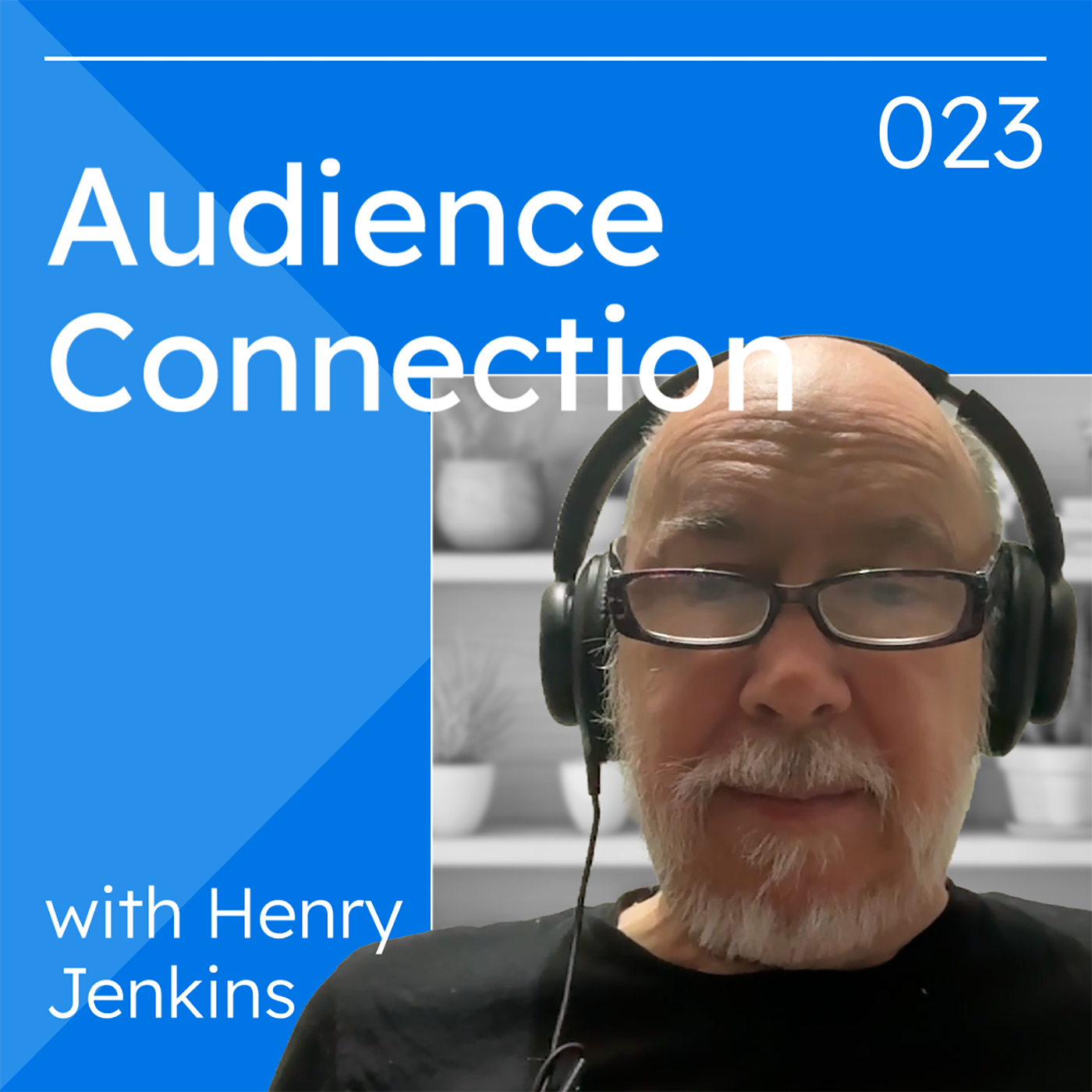
Episode 17, Season 2 examines why “going viral” is the wrong goal and what fandom actually asks of a brand, offering a practical reframe for marketers, creatives, leaders, and internal comms teams.
Casual has released the twenty-third episode of its second season of the Audience Connection podcast. The guest is Henry Jenkins, Provost Professor of Communication, Journalism, Cinematic Arts and Education at the University of Southern California, who made fandom a serious academic subject with his 1992 book Textual Poachers and previously ran MIT’s Comparative Media Studies program for over a decade. Hosted by Oliver Atkinson, the episode examines a tension every brand now faces: the instinct to chase virality collides with the reality that audiences, not companies, decide what spreads.
Central to the conversation is the distinction between viral and spreadable media. Jenkins argues that “viral” assumes a level of control brands lost long ago, while spreadable content moves because it serves the community passing it on. He is blunt about the word itself: “the word viral literally makes me go sick.” His reframe is just as direct: “companies don’t create fans, they court them.” He illustrates the point with brands that fed a fandom rather than hijacked it, including Remington’s playful campaign asking how Superman shaves, and Lego, which flew a clinically blind fan, Matthew Shifrin, to Scandinavia after he built his own Braille instructions, then committed to Braille in every build kit. He contrasts these with CoverGirl attaching itself to the Capitol, the villainous side of The Hunger Games, a tie-in he calls a strange choice.
The stakes land hardest where trust breaks. Jenkins points to Survivor’s fiftieth season, promoted for a year as the season designed by fans, where the choices turned out to be largely cosmetic and the producers raised expectations “they never had any intention of meeting.” He reads A24’s cease-and-desist letters against Backrooms fan art, aimed at a film built on 4chan creepypasta and made for roughly $1 million, as cutting off the very creative culture that produced the hit. Underlying all of it is what he calls the moral economy, the shared expectations of a fair exchange between a brand and its audience. For communicators tempted to measure success in attention alone, Jenkins offers a caution that doubles as the episode’s through-line: getting noticed is easy, but “I doubt I just built loyal fans by getting their attention just now.” The work, he argues, is earning a place in the conversation rather than shouting over it.
This episode is available now on all major podcast platforms. Show notes, guest links, and additional resources can be found at Casual’s website.