Episode 14, Season 2 examines how a branded content campaign that hid its sponsor in the credits outperformed the conventional paid-media playbook, offering a repeatable model for marketers who want earned reach built on trust rather than spend.
Casual has released the fourteenth episode of its second season of the Audience Connection podcast. The episode features Kristen Berke, VP of Entertainment and Branded Content Partnerships at LA Times Studio, where she leads the Brand Studio team on campaigns for clients including Pfizer, Audible, Target, and Netflix. Hosted by Lydia Chan, the episode dissects a single campaign that, in Chan's words, on paper shouldn't have worked, and examines what happens when a brand invests in human storytelling rather than product messaging.
Central to the conversation is Diaries of Transformation, a campaign Berke's team produced for enterprise AI company Publicis Sapient. Rather than a product tutorial, the team issued an open call for filmmakers, drew more than 100 submissions, and selected five short documentaries in which the brand appeared only in the title card as a co-executive producer. There was no product placement, no feature mentions, and no paid media. Berke explains that the goal was to align the brand with a broad human theme rather than its software: "It's going to be whatever moves people emotionally and whatever kind of taps into that inherent, universal feeling of what it means to be a human being on this planet." She traces how branded content has shifted from a "presented by" credit to genuine executive-producer partnership, and why editorial credibility is the asset brands are really buying. "If you are really looking for that trust and that integrity to be in place, then I think that's what makes the L.A. Times kind of unique," she notes.
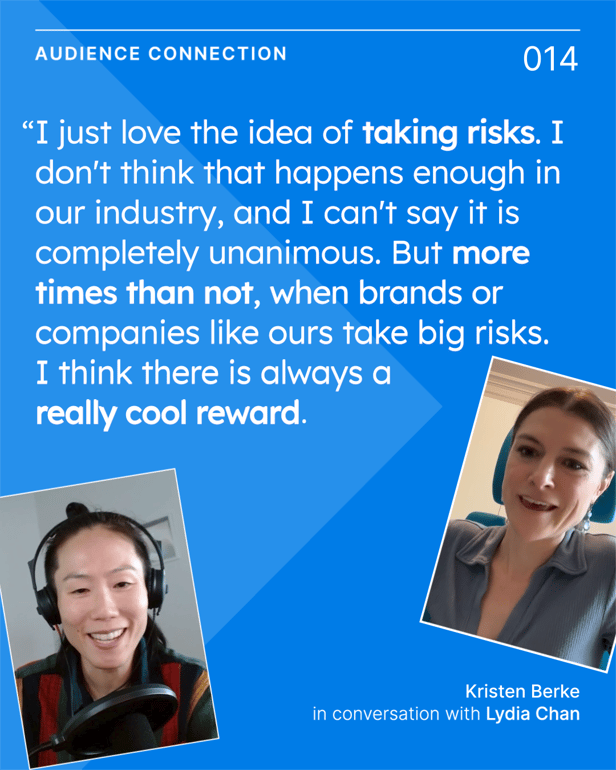
The episode also addresses distribution, and a finding that will resonate with any marketer under pressure to buy scale: the campaign ran with no paid spend and generated its reach almost entirely through earned media, driven by a filmmaker community quick to reshare each other's work. Berke is candid that part of the outcome was "lightning in a bottle," but argues the underlying model is turnkey, beginning with a single question about the brand's "four or seven word mission." She cautions that this approach only works when the message is consistent, warning that a one-off attempt "cannot be the first and only time that you're relaying that message to consumers, because I think that's going to ring false really fast." With a 147-year-old newsroom and 45 Pulitzer Prizes behind her, Berke makes the case that most teams over-invest in impressions while starving the work itself, and that trust, not scale, is the real product. Her closing takeaway: bigger risks tend to bring greater rewards.
This episode is available now on all major podcast platforms. Show notes, guest links, and additional resources can be found at Casual's website.